

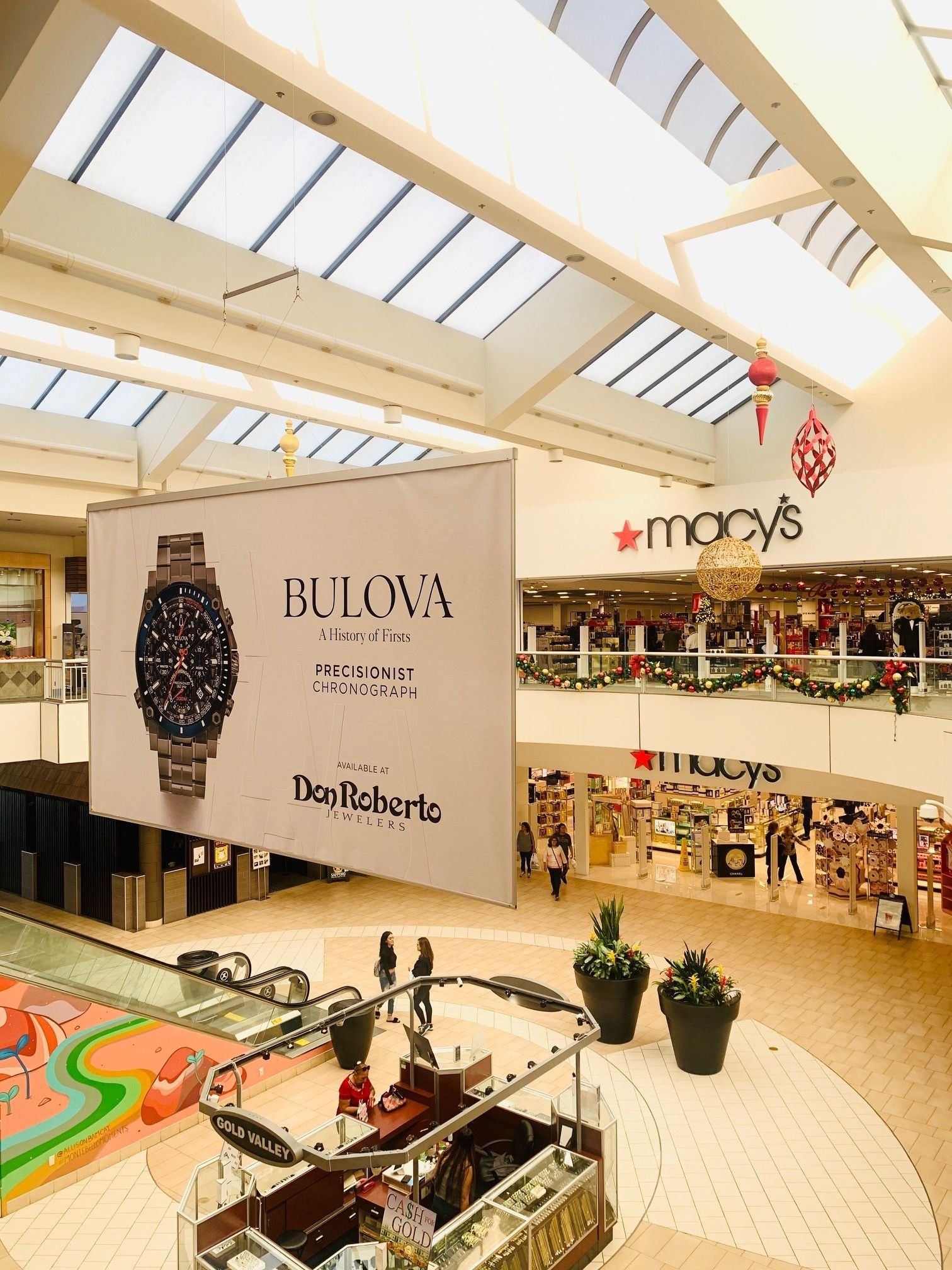
Most disappointing out-of-home results trace back to a handful of avoidable mistakes rather than the medium itself. Out-of-home has different rules than digital or broadcast advertising, and applying assumptions from those channels directly to a billboard or mall placement is where campaigns underperform.
This article covers the mistakes seen most often across mall and outdoor campaigns, and the straightforward corrections for each.
Cramming too much copy into the design
Out-of-home has a few seconds, sometimes less, to communicate a message. Advertisers used to writing digital or print copy often bring too many words, multiple offers, or a long list of features to a format that can only support one clear idea.
The fix is ruthless editing before production. A single headline, a strong image, and one call to action outperform a crowded layout in every dwell-time-limited format, and even in high-dwell placements like food courts, clarity still beats density.
Running flights that are too short to matter
A two-week flight rarely builds meaningful recognition, especially for awareness-focused goals. Out-of-home works through repetition, and a short flight ends just as familiarity is starting to form.
- Budget for at least a three-month flight for awareness objectives
- Reserve short flights for time-sensitive, response-driven promotions only
- Plan flight length against the goal before choosing the format
Choosing the wrong placement for the message
A detailed message with several sentences of copy placed on a high-speed roadside billboard will not be read. Conversely, a simple brand and logo message placed in a high-dwell food court panel wastes the extended attention available there.
Match message complexity to viewing time. Fast-glance formats need a single strong visual and short line; high-dwell formats can carry a paragraph, a list, or a QR code with more context.
Skipping a baseline and never measuring results
Many advertisers launch a campaign, watch general sales trends, and draw conclusions without ever isolating the campaign's actual effect. Without a baseline or a dedicated tracking method, it becomes impossible to know whether a lift came from the campaign or from something else entirely.
- Set a baseline for traffic, sales, or search volume before launch
- Use a dedicated phone number, code, or QR link exclusive to the placement
- Review data at set intervals rather than only at the end of the flight
Changing creative too often
Rotating creative frequently in the name of freshness resets the recognition an audience is building rather than reinforcing it. Out-of-home rewards consistency far more than novelty, particularly for brand-building goals.
It is better to keep a strong design running for the length of the flight and save new creative concepts for the next flight, rather than testing several looks within a single short run.
Ignoring the viewing environment
A design that looks polished on a laptop screen can fail at scale, at distance, in mall lighting, or against a busy background. Not testing a design in a mockup of its actual viewing conditions, distance, angle, ambient light, is a common and costly oversight.
Always review a proof at the actual size and, where possible, in a photo simulation of the installed location before finalizing production.
Frequently asked questions
How much copy should an out-of-home ad have?
As little as possible for fast-glance formats, generally under seven words on a headline. High-dwell placements can support more but should still avoid clutter.
How long should a mall advertising flight run?
At least three months for awareness goals. Shorter flights work only for time-sensitive promotions with a hard deadline.
Why did my out-of-home campaign not show measurable results?
Most often because no baseline or dedicated tracking method was set up before launch, making it impossible to isolate the campaign's effect.
Is it better to change creative often to stay fresh?
No. Consistent creative across a flight builds stronger recognition than frequent design changes.
Sources
- Out of Home Advertising Association of America
- FTC advertising and marketing rules
- Harvard Business Review on advertising effectiveness
- Geopath OOH audience measurement
- U.S. Small Business Administration marketing guidance
Related reading
Use this ooh advertising mistakes guidance as a starting point, then ask MallAds.com to confirm current locations, formats, timing, and pricing for your campaign.