

A pop-up gives a brand something a permanent store cannot: the ability to test a market, launch a product, or create urgency without a long-term lease. Shopping centers have built entire leasing programs around short-term space precisely because pop-ups bring fresh content that keeps a property interesting for repeat shoppers.
This guide covers the practical steps to plan a mall pop-up or activation, from choosing a location to closing it down cleanly.
Deciding what kind of pop-up
Pop-ups fall into two broad categories: retail pop-ups that sell product on the spot, and brand activations that build awareness or collect leads without a transaction. The choice shapes everything downstream, including staffing, point-of-sale needs, and insurance requirements.
A retail pop-up needs inventory management, a payment system, and often a temporary sales tax registration depending on the state. An activation needs a clear engagement flow and a plan for capturing contact information if that is the goal.
Choosing the location
Center court and wide concourse spots draw the most traffic but come at a premium and require more square footage flexibility. In-line vacant units offer more enclosed space and a storefront feel, useful for brands wanting a fuller retail experience for a limited run.
- Center court for maximum visibility and shortest commitments
- Wide concourse spots near anchor entrances for steady flow
- Vacant in-line units for a fuller pop-up shop format
- Near food court for longer dwell time among visitors
Booking and logistics
Property management typically requires a certificate of insurance, a signed license agreement, and proof of any required permits before move-in. Build in at least four to six weeks of lead time for approvals, especially for anything involving food, open flame, or electrical modifications.
Confirm move-in and move-out windows, since many properties require setup outside mall operating hours to avoid disrupting shoppers. Ask about power access, wifi, storage for inventory overnight, and whether the property provides tables or fixtures or expects the brand to supply everything.
Staffing the pop-up
Staff who understand the product and can speak to it confidently outperform staff who are simply present. For multi-day activations, schedule enough coverage that staff are not working long shifts alone, since fatigue shows up quickly in how people greet shoppers by hour six.
Brief staff on the single goal of the pop-up, whether that is units sold, leads captured, or samples distributed, so every conversation moves toward that outcome rather than becoming an open-ended chat.
Extending reach beyond the footprint
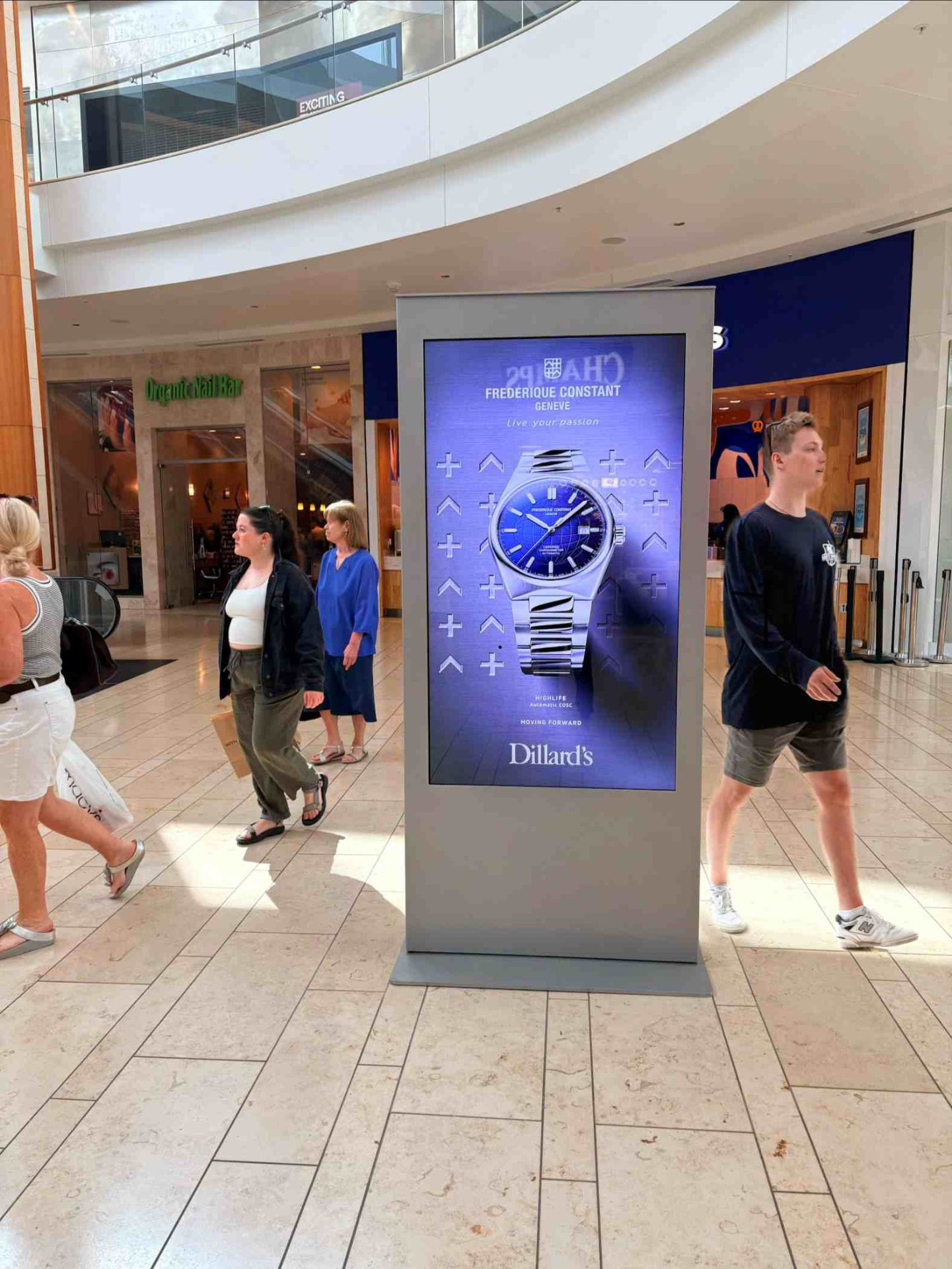
A pop-up's physical footprint is small compared to the mall's total traffic, so pairing it with directory listings, digital screen mentions, and signage elsewhere in the property helps shoppers who are not walking directly past find their way to it.
- Directory advertising pointing shoppers to the pop-up location
- Digital screens near entrances announcing dates and location
- Social promotion tagging the specific mall property
Measuring and closing out
Track daily foot traffic into the space, conversion to sale or sign-up, and average time spent by visitors. Compare performance across days of the week to identify which staffing levels and hours actually earned results, which informs the next booking.
Close-out should include a walkthrough with property management to confirm the space is returned to condition, since deposits are often tied to this step and delays can affect future bookings at the same property.
Frequently asked questions
How long can a mall pop-up run?
Terms range from a single weekend to several months, depending on the property and the space. Shorter terms are easier to book on short notice.
What does a typical pop-up cost?
Costs vary widely by property, size, and season, and usually include a base license fee plus a percentage of sales in some agreements. Ask for a quote specific to the location.
Do I need insurance for a pop-up?
Yes. Most properties require a certificate of general liability insurance naming the property and management company before move-in.
Can a pop-up include food sampling?
Often yes, subject to health department approval and property food safety rules, which should be confirmed early in planning.
Sources
- ICSC shopping center industry research
- U.S. Small Business Administration marketing guidance
- National Retail Federation research
- Out of Home Advertising Association of America
- FTC advertising and marketing rules
Related reading
MallAds.com helps advertisers turn mall pop-up guide research into a practical media plan, with placement support across more than 1,700 malls and billboard markets nationwide.