

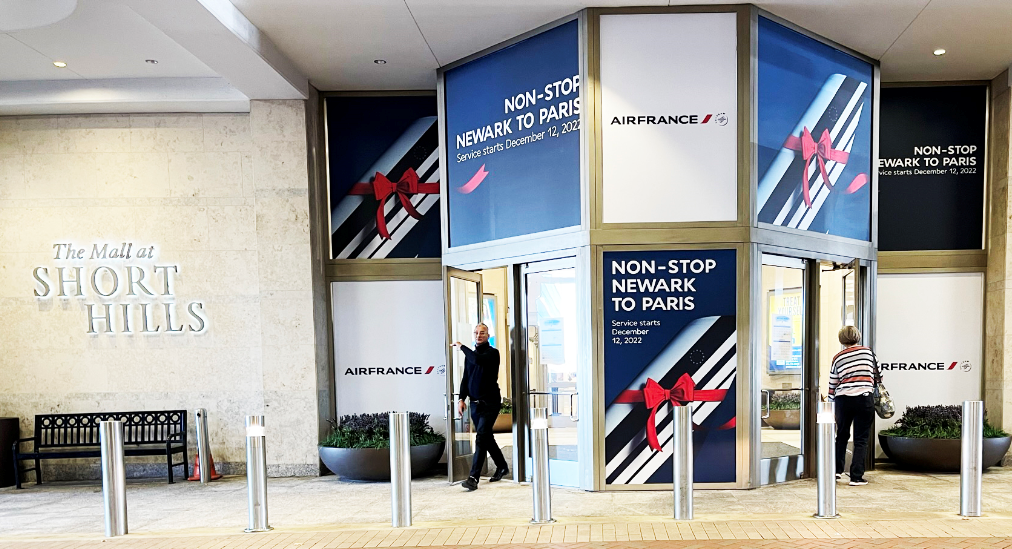
A banner tells a shopper what a brand is. An experience lets them find out for themselves, and that difference shows up directly in how long people remember the encounter. Shopping centers are one of the few environments where a brand can build a physical experience in front of a large, unhurried audience without the cost of a standalone event.
This article covers what experiential marketing looks like inside a mall, the formats that work best, and how to plan one that earns attention instead of just occupying space.
Why malls suit experiential work
Malls already deliver two things an experience needs: dwell time and foot traffic. Shoppers are not mid-commute, they are not rushing to catch a flight, and many have set aside part of a day specifically to browse. That makes them receptive to stopping for something interesting in a way that roadside traffic or airport transit never is.
Common areas, center court, and wide concourses give a brand physical room to build something that would be impossible on a billboard or a static panel. The audience also skews toward households and groups, which means one engaged shopper often brings along two or three more people who witness the activation as well.
Formats that work
The strongest mall experiences give a shopper a reason to physically interact, not just look. That could be a product they can touch, a game they can play, or a photo moment they want to share.
- Sampling stations for food, beverage, or beauty products
- Interactive digital displays with a game or personalization tool
- Photo-worthy installations built around a seasonal theme
- Product demo stations staffed by brand ambassadors
- Charity or cause-tied activations that invite participation
Designing the moment
Start with the single action you want a shopper to take, whether that is trying a sample, scanning a code, or signing up for something. Everything in the build should point toward that one action, because a crowded experience with five competing calls to action produces none of them well.
Staffing matters more than the build itself. A well-designed booth with disengaged staff underperforms a modest booth with staff who greet people and explain what is happening. Budget for trained brand ambassadors, not just materials.
Timing and placement
Weekend afternoons draw the largest and most relaxed crowds, and school holidays bring family groups that linger longer than weekday shoppers. Center court and food court entrances are the highest-traffic spots in most properties, and property management can confirm peak hours specific to that location.
Multi-day activations build more total reach than single-day events, since repeat shoppers who missed the first pass get another chance, and word of mouth from day one brings people back on day two.
Pairing with other media
An experiential activation performs best when shoppers already recognize the brand before they arrive at the booth. Running banner, digital, or kiosk advertising in the weeks leading up to an activation increases both foot traffic to the booth and the likelihood that a shopper stops rather than walks past.
- Pre-event digital screen countdowns near the activation site
- Directory and wayfinding mentions in the weeks before
- Kiosk signage extending the message after the activation ends
Measuring results
Track sample or trial counts, sign-ups collected, social shares tagged to the activation, and any redemption codes distributed on site. Compare footfall at the mall on the activation day against a typical day to estimate incremental draw.
Post-event surveys with a small incentive can also capture brand recall a week or two later, which is a better indicator of lasting impact than same-day enthusiasm.
Frequently asked questions
How much space does a mall experience require?
It ranges from a small tabletop sampling station to a full center court build. Property management can advise on available footprints.
Do malls allow product sampling?
Most do, subject to health and safety approval for food and beverage items. Confirm requirements per property well in advance.
How far ahead should an activation be booked?
Popular common areas book out weeks or months ahead, especially around holidays, so early booking secures the best dates.
Is experiential marketing only for large brands?
No. Smaller footprints and single-day activations make this accessible to regional and local businesses as well.
Sources
- ICSC shopping center industry research
- Think with Google consumer insights
- Harvard Business Review on advertising effectiveness
- Out of Home Advertising Association of America
- Nielsen advertising research
Related reading
Use this experiential marketing in malls guidance as a starting point, then ask MallAds.com to confirm current locations, formats, timing, and pricing for your campaign.