

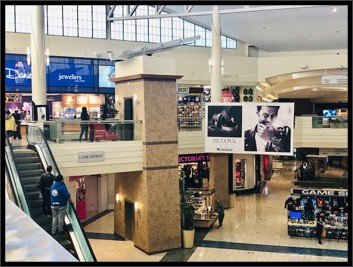
Predictions of the mall's decline have circulated for years, yet successful shopping centers have adapted rather than disappeared, shifting toward experience, dining, and mixed-use development alongside retail. Advertising inside those properties is evolving alongside them, becoming more digital, more measurable, and more integrated with the overall shopping experience.
This article looks at where mall advertising is heading and what advertisers should plan for over the next several years.
The shift from static to digital
Digital displays are steadily replacing a share of static print inventory in malls, offering advertisers the ability to change creative remotely, run multiple advertisers on a rotation, and adjust messaging by time of day or day of week without new production costs.
Static formats are not disappearing, they remain cost-effective for long-flight brand campaigns, but the mix within a property is shifting toward a blend of both, giving advertisers more flexibility in how they plan a campaign across a single mall.
Programmatic buying reaches malls
Programmatic digital out-of-home, already common on roadside digital billboards, is extending into shopping centers, letting advertisers buy screen time in smaller increments, target specific dayparts, and layer in data such as weather or local events to trigger creative changes automatically.
- Smaller advertisers gaining access to premium mall screens at lower minimums
- Dayparting allowing different messages for morning, lunch, and evening traffic
- Automated creative triggers based on weather, events, or inventory
Malls as experience and community hubs
Surviving and thriving malls increasingly function as community and entertainment destinations rather than pure retail, adding dining, fitness, events, and mixed-use residential and office space. That shift changes who is in the building and why.
Advertisers are responding by treating malls less as a retail-only channel and more as a general local audience channel, similar to how a town center functions, suitable for healthcare, financial services, education, and civic messaging alongside traditional retail advertisers.
Better measurement becoming standard
Foot traffic counting, mobile location data, and dwell-time analytics are becoming more available at the property level, giving advertisers access to audience data that used to require custom research. This trend is closing much of the measurement gap that historically favored digital channels over physical advertising.
- Property-level foot traffic counts increasingly available to advertisers
- Mobile data enabling exposure-to-visit measurement at scale
- Standardized audience metrics making cross-property comparison easier
Sustainability and materials
Print materials, banner substrates, and display construction are shifting toward more sustainable and reusable options as properties and advertisers respond to environmental expectations from shoppers and corporate sustainability goals.
This has practical implications for advertisers planning production timelines and costs, as sourcing sustainable materials sometimes requires longer lead times than legacy options, though pricing is converging as adoption grows.
What this means for advertisers now
The properties investing in digital infrastructure, measurement, and experience are the ones likely to remain strong advertising environments for years to come, and getting placements booked in those properties early, before demand and pricing rise further, is a reasonable strategy for advertisers planning multi-year presence.
Advertisers should also expect more flexible buying options, shorter minimum commitments on digital inventory, and better data to justify spend to internal stakeholders, all of which lower the barrier to testing mall advertising for the first time.
Frequently asked questions
Are malls becoming less relevant for advertisers?
No. Well-managed malls are adapting into community and mixed-use hubs, and advertising inventory in strong properties remains valuable and increasingly measurable.
Is digital replacing static mall advertising entirely?
Not entirely. Static formats remain cost-effective for long-flight brand campaigns, and most properties run a mix of both.
Will programmatic buying make mall advertising accessible to smaller businesses?
Yes, programmatic and smaller digital buying increments are lowering the entry point for smaller advertisers to access premium mall screens.
How is measurement improving for mall advertising?
Foot traffic counting and mobile location data are becoming more available at the property level, closing the measurement gap with digital channels.
Sources
- ICSC shopping center industry research
- DPAA digital out of home industry resources
- Geopath OOH audience measurement
- Statista out of home advertising statistics
- National Retail Federation research
Related reading
MallAds.com helps advertisers turn future of mall advertising research into a practical media plan, with placement support across more than 1,700 malls and billboard markets nationwide.