

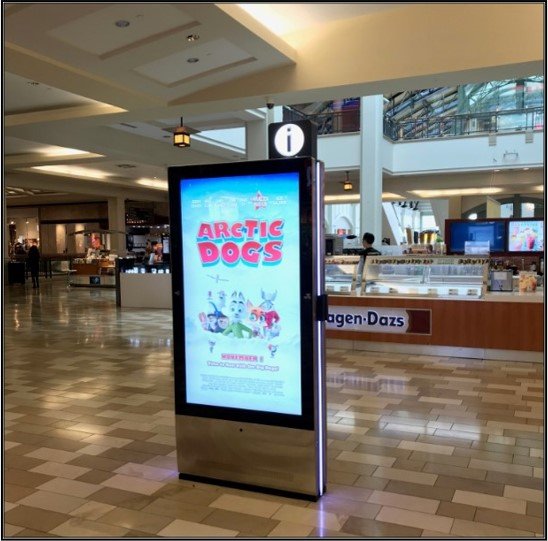
In-mall digital networks have grown into the most flexible inventory a shopping center offers. Screens sit at entrances, in concourses, at food courts, and near vertical transportation, all running from a central content system that can change your message in hours.
This article explains how those networks are sold, what determines the value of a screen, and the creative rules that separate effective in-mall digital from expensive wallpaper.
How the network is structured
A mall digital network is a set of screens driven by a shared playlist. Advertisers buy a slot in the loop, typically eight to fifteen seconds, and that slot plays in rotation across whichever screens are included in the package.
Some networks sell the whole property as one package; others let you choose zones, such as food court only or entrance screens only. Zone buying matters when your message is location-specific.
What determines the value of a screen
Position and dwell, in that order. A screen facing a seated food court audience is worth more per play than one in a corridor people hurry through, even if raw traffic past the corridor screen is higher.
- Foot traffic passing the screen during operating hours
- Dwell time in the space where it sits
- Viewing distance and angle from the natural path
- Screen size, brightness, and resolution
- Number of advertisers sharing the loop
Creative that works on silent screens
Mall screens run without audio, so everything must carry visually. Build creative that reads in the first two seconds, holds one idea, and ends with a clear brand and action frame that remains on screen long enough to be absorbed.
Motion should support the message, not decorate it. A single reveal or a slow push works. Rapid cuts and busy transitions read as noise from twenty feet away and reduce recall.
Dayparting and message rotation
Digital lets you match message to moment. Morning traffic in a mall skews toward walkers, seniors, and parents with young children; afternoons bring students; evenings and weekends bring families and couples. Running different creative against those audiences costs nothing extra on most networks.
You can also rotate several messages within a flight, which is useful for advertisers with multiple service lines or a product range.
Speed to market
The practical advantage advertisers notice first is that digital campaigns launch in days. No printing, no shipping, no overnight install window. For weather-driven businesses, event promotion, and reactive campaigns, that speed is the whole reason to choose digital.
Combining digital with static
The strongest in-mall plans use both. Static formats hold a permanent brand presence in high-dwell spots while digital carries the changing offer. Shoppers experience it as one consistent campaign rather than as two separate buys.
Frequently asked questions
How long is a typical digital slot?
Eight to fifteen seconds is standard in mall networks, played in a loop that repeats every one to two minutes.
Can I run video?
Yes, subject to the network spec, but design it to work silently and to communicate within the first two seconds.
How many advertisers share the loop?
Commonly six to ten. Always ask, because loop share directly determines how often your message appears.
Can I change creative mid-flight?
On most networks yes, often at no additional cost, which is one of the format's biggest advantages.
Sources
- DPAA digital out of home industry resources
- Out of Home Advertising Association of America
- IAB digital advertising standards
- Nielsen advertising research
- Geopath OOH audience measurement
Related reading
MallAds.com helps advertisers turn mall digital display advertising research into a practical media plan, with placement support across more than 1,700 malls and billboard markets nationwide.