

Programmatic DOOH applies the automated buying model familiar from digital advertising to physical screens. You set a budget, an audience definition, and a geography, and a platform bids for available screen time across many media owners.
It is genuinely useful, and it is also frequently oversold. This article separates the two.
How the mechanism works
Media owners expose available screen time through a supply-side platform. A buyer's demand-side platform bids for that time, and when it wins, the creative plays and an impression is counted based on the screen's audience model for that moment.
Unlike web advertising, there is no individual user being targeted. The unit of purchase is a play on a screen, and the audience attached to it is a modelled estimate of who was in front of it.
What programmatic does well
Flexibility is the main benefit. Budgets can be shifted between markets daily, creative can be triggered by conditions, and campaigns can launch or pause without renegotiating a contract.
- Rapid multi-market activation without separate negotiations
- Conditional triggers such as weather, inventory levels, or time of day
- Budget reallocation mid-flight based on performance signals
- Test-and-learn across many screen types at low commitment
- Unified reporting across a fragmented supplier base
Where direct buying still wins
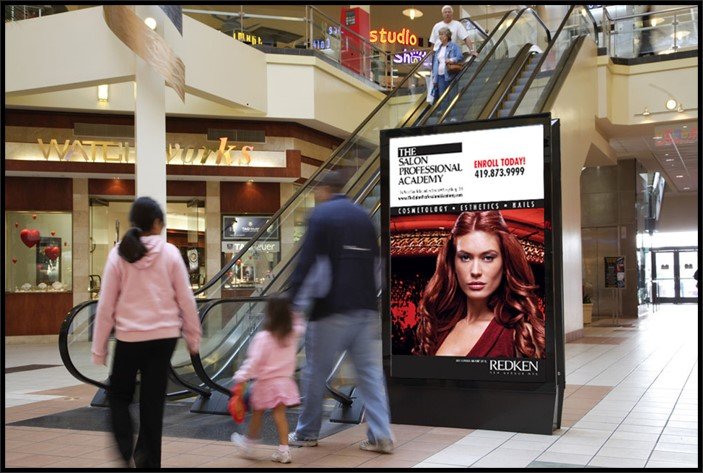
Premium placements, meaning the specific screens with the best positions in the best properties, are often not in the programmatic pool at all, or are only there as remnant inventory. If you need the center court kiosk at a particular mall for a product launch, you buy it direct.
Direct buying also gets you guaranteed share of voice, negotiated production support, and the ability to combine static and digital in one package. Programmatic gives you none of those.
The impression question
Programmatic DOOH is priced per thousand impressions, which invites direct comparison with online media. That comparison is misleading. A DOOH impression is a modelled opportunity to see on a large public screen; an online impression may be a small unit below the fold.
Compare DOOH to DOOH and judge online separately on its own outcomes.
A practical hybrid approach
Most sophisticated advertisers use both. Direct buys hold the anchor placements in priority markets for the full campaign, while programmatic adds reach in secondary markets and absorbs budget flexibility.
This keeps the quality placements locked while preserving the responsiveness that makes programmatic attractive.
Questions to ask a programmatic partner
Ask which media owners are in the supply pool, whether specific properties can be targeted or only broad categories, how impressions are modelled, and what percentage of delivered plays fall in screens you would have chosen yourself. The answers vary enormously between platforms.
Frequently asked questions
Can I target individuals with programmatic DOOH?
No. DOOH is a broadcast medium and targeting operates at the screen and daypart level, not the person level.
Is programmatic cheaper?
Sometimes on a rate basis, but premium placements typically cost more or are unavailable, so total effectiveness can be lower.
Can mall inventory be bought programmatically?
Some of it, depending on the network. The best in-mall positions are usually sold direct.
Do I need a DSP to buy DOOH?
No. Most advertisers buy through a media partner who handles both direct and programmatic paths.
Sources
- DPAA digital out of home industry resources
- IAB digital advertising standards
- Out of Home Advertising Association of America
- Geopath OOH audience measurement
- Association of National Advertisers
Related reading
Ready to apply these strategy insights? MallAds.com brings more than 20 years of shopping-center and billboard experience to campaigns built around your market, audience, and budget.