

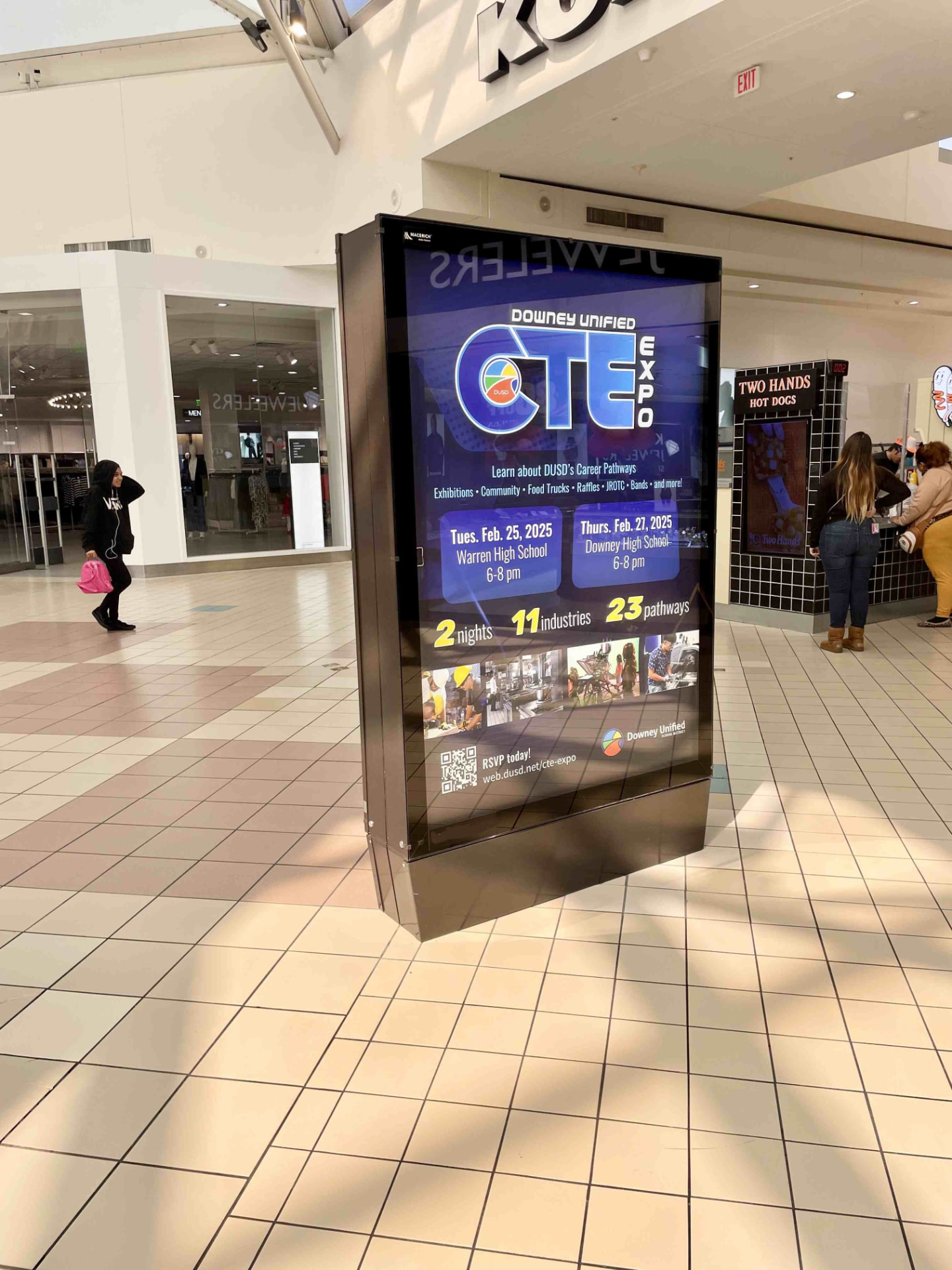
Ticket sales for concerts, sports, theater, and local events share a common trait: they are time-limited and depend heavily on local audience reach in a compressed selling window. Shopping centers put an event message in front of exactly that local audience, repeatedly, in the weeks before tickets need to sell.
This article covers how entertainment and event marketers use mall advertising, which formats fit the ticket-selling calendar, and how to time a campaign against an on-sale date.
Why local reach matters for events
Most events, outside of major touring acts, draw the bulk of their audience from within a reasonable driving distance of the venue. That makes a shopping center's local trade area a close match to the actual addressable audience for a concert, sports game, theater run, or community festival.
Unlike a national streaming or search campaign, mall advertising does not spend against people who will never realistically attend, which matters for events working with a fixed marketing budget against a fixed number of available seats.
Types of events that use mall advertising
Sports teams use mall advertising for season ticket drives and single-game promotion, theaters and performing arts venues use it to build audience for a specific run, and touring concerts use it in markets on their route to drive local ticket sales. Local festivals, fairs, and community events also rely on it for general public awareness.
- Sports team season ticket and single-game campaigns
- Theater and performing arts run promotion
- Touring concert and comedy show local market pushes
- Community festivals, fairs, and public events
Timing against the on-sale calendar
Event advertising works backward from a specific date, which makes it different from most retail campaigns that run on an ongoing basis. A typical schedule builds a presale awareness phase two to four weeks before tickets go on sale, increases intensity through the general on-sale period, and often runs a final urgency push in the last week or two before the event date.
Digital formats earn their value in this category specifically because messaging needs to update as an event approaches, moving from general awareness to a countdown to a final call as seats remain unsold.
Formats for event promotion
Digital screens near entrances suit the changing nature of event messaging, since countdowns and urgency messaging can be refreshed without new print production. Banners and column wraps work well for the earlier awareness phase when the message is simply building recognition of the event and its date.
Kiosk and standee placements near center court can support a ticket sales presence or QR code redemption for events looking to convert a shopper on the spot rather than relying entirely on them to purchase later online.
Creative that sells tickets
The date, venue, and a clear path to purchase need to be immediately visible, since event advertising fails most often when a shopper is interested but cannot quickly determine when or how to act. Naming a headline performer, team matchup, or specific draw of the event outperforms a generic announcement.
Urgency messaging, such as limited seating or a specific date a presale ends, gives a shopper a reason to purchase during that week rather than deciding to come back later and forgetting.
Measuring event campaigns
Track ticket sales against the campaign flight dates, and use a dedicated promo code or landing page where possible to attribute sales specifically to the mall placement. Compare sell-through rates in markets running mall advertising against markets without it when promoting a touring event across multiple cities.
Frequently asked questions
How far ahead of an event should advertising start?
Two to four weeks before the on-sale date is common, with intensity increasing as the event date approaches.
Is digital or static better for event promotion?
Digital works well for changing urgency messaging as the event nears, while static suits the earlier general awareness phase.
Can a small local event afford mall advertising?
Yes. Smaller formats like standee and directory placements make this accessible for community events on modest budgets.
How is success measured for event advertising?
Ticket sales tied to a dedicated promo code or landing page tracked against the campaign flight dates is the most direct measure.
Sources
- ICSC shopping center industry research
- Out of Home Advertising Association of America
- Think with Google consumer insights
- Comscore audience measurement
- Nielsen advertising research
Related reading
Ready to apply these industries insights? MallAds.com brings more than 20 years of shopping-center and billboard experience to campaigns built around your market, audience, and budget.