

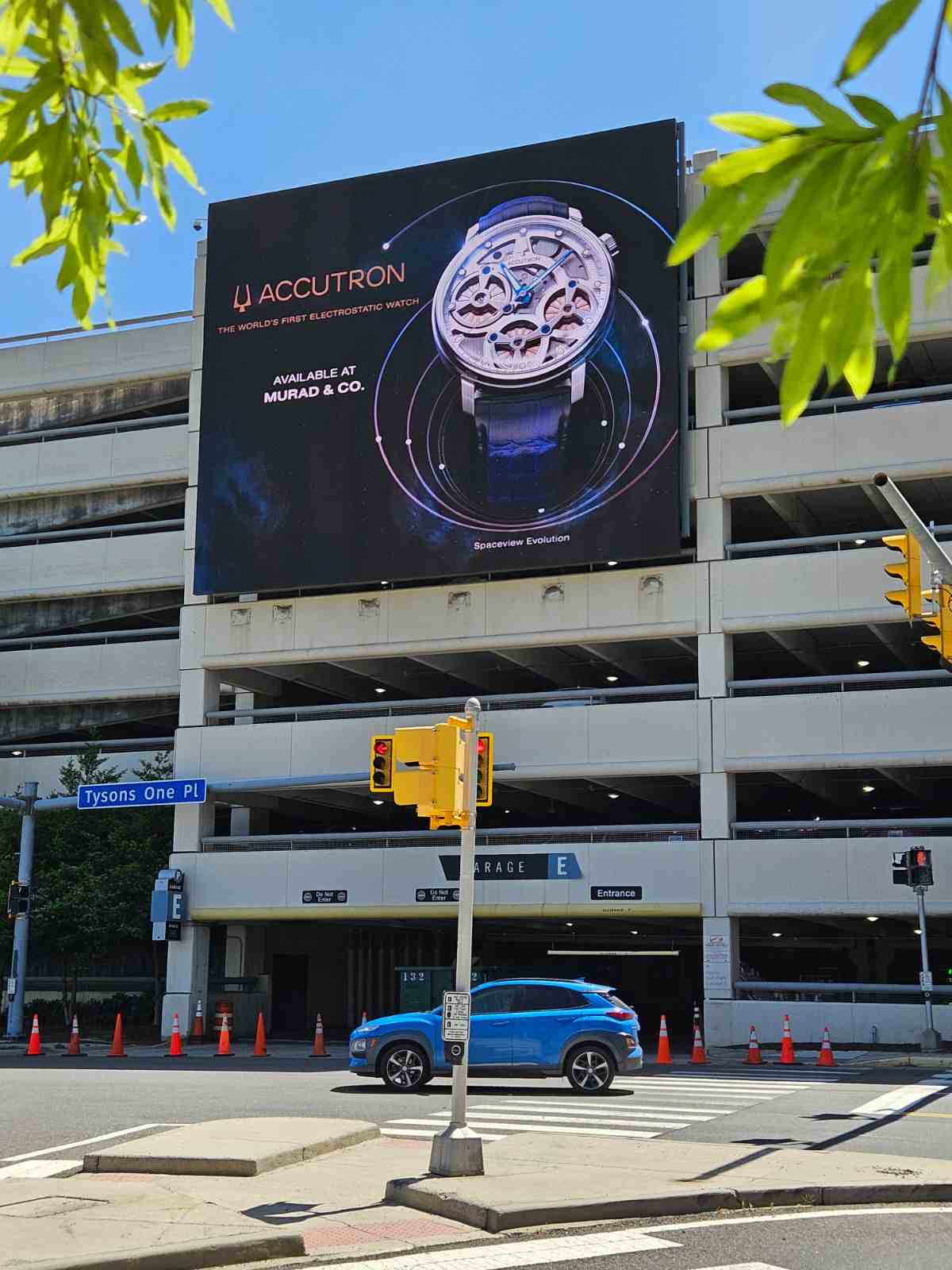
Digital billboards changed out-of-home economics. Because the creative is a file rather than a printed vinyl, a single structure can carry several advertisers, launch in days, and change its message by time of day. That flexibility comes with a trade-off in exclusivity that every buyer should understand before comparing quotes.
Here is how digital board pricing works, what you actually get for the money, and when a static bulletin remains the better buy.
Loop share is the unit you are buying
A typical digital board runs a loop of six to eight advertisers, each with an eight-second slot. Your creative therefore appears roughly once a minute for every hour the board operates. Over a four-week flight that adds up to tens of thousands of individual plays.
When you compare a digital rate to a static rate, remember that static gives you one hundred percent of the face for the whole flight, while digital gives you a recurring share. Neither is inherently better value; they suit different objectives.
What changes the rate
Traffic volume and read time still dominate, exactly as with static boards. On top of that, digital adds levers that static does not have, and each one moves the price.
- Number of advertisers sharing the loop
- Dayparting, since rush-hour-only buys price differently than full-day
- Board size, resolution, and whether it is a landmark unit
- Number of boards in the package across a market
- Length of commitment across consecutive flights
Where digital earns its premium
Digital shines when the message needs to change. A restaurant can run breakfast creative until ten in the morning and dinner creative from four. A healthcare system can swap flu-shot messaging for urgent-care messaging as the season turns. A retailer can push a countdown that updates as a sale approaches.
It also removes the production cycle. There is no printing, no install crew, no waiting for weather. A campaign approved on Monday can be live on Wednesday, which matters when you are reacting to a competitor, a weather event, or an unexpected news moment.
Where static still wins
If your goal is pure presence, such as a brand name a community should associate with a location, a static bulletin gives you undivided ownership of that view for the whole flight. Nobody else appears on your wall.
Static also tends to be the stronger choice on roads where traffic moves slowly enough for long dwell but the board is passed only once per trip. In that setting an always-present message beats a rotating one.
Creative rules for digital boards
Design for eight seconds with no animation unless the operator permits it, since many jurisdictions restrict motion on roadside digital for safety reasons. Use maximum contrast, one focal image, and type heavy enough to read at distance in daylight and at night.
Build a night version if the board is in a dark corridor. Dark backgrounds with light type read better after sunset and reduce the halo effect that washes out fine detail.
How digital boards fit a mall campaign
Digital boards are the outer ring of a shopper strategy. They intercept the drive to the center, then in-mall digital panels and kiosks pick the same person up once they are inside and already in a spending mindset. Running consistent creative across both rings is what turns two separate exposures into one remembered brand.
Frequently asked questions
How many times will my ad play?
Divide the operating hours by the loop length. An eight-second slot in a sixty-four-second loop plays about fifty-six times per hour, which is roughly nine hundred plays across a sixteen-hour day.
Can I run different creative on different days?
Yes. Scheduling by daypart and day of week is a core advantage of digital inventory and is usually included.
Is animation allowed?
It varies by state and municipality. Many roadside digital boards require static images with a hard cut between advertisers.
Do digital boards work at night?
They do, and brightness is automatically dimmed after dark. Build a high-contrast night creative to take full advantage.
Sources
- Out of Home Advertising Association of America
- DPAA digital out of home industry resources
- Geopath OOH audience measurement
- Statista out of home advertising statistics
- IAB digital advertising standards
Related reading
Use this digital billboard cost guidance as a starting point, then ask MallAds.com to confirm current locations, formats, timing, and pricing for your campaign.