

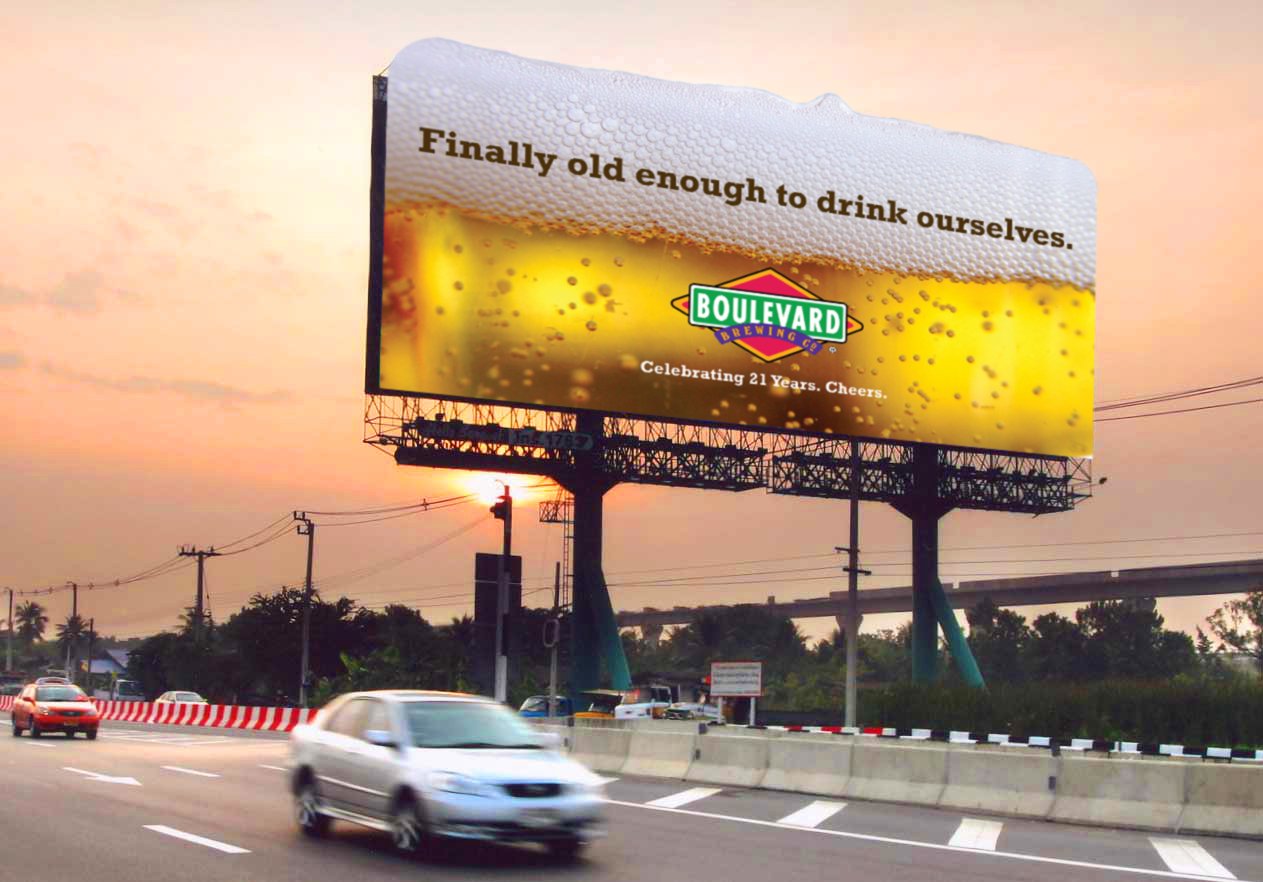
Billboards are the most familiar out-of-home format and the one with the widest price range. The same physical structure can cost a few hundred dollars a month on a rural two-lane road or many thousands on an urban arterial, because billboard pricing is a function of how many people pass it and how well they can see it.
This guide covers how boards are rated, what separates a cheap board from a valuable one, and how billboards pair with in-mall placements to catch the same shopper twice.
How billboard rates are determined
Every board carries an audience estimate built from traffic counts, travel patterns, and visibility modeling. The industry standard for this in the United States comes from Geopath, which publishes impression estimates per unit. Rates are then set against those impressions, adjusted for market demand.
Two boards on the same highway can price very differently based on read time, angle to traffic, illumination, and whether the driver approaches it head-on or catches it at an angle. Read time is underrated: a board a driver sees for six seconds is worth far more than one they clear in two.
Static bulletins, posters, and digital boards
Bulletins are the large highway boards, sold per four-week flight with a production and installation charge for the printed vinyl. Posters are smaller units on secondary roads and cost considerably less, making them a good fit for neighborhood-level messages.
Digital boards rotate several advertisers, usually in an eight-second slot within a sixty-four-second loop. You give up exclusivity and gain flexibility: dayparting, quick creative changes, and the ability to run multiple messages within a single buy.
What drives a billboard budget beyond the media rate
Production is the line item first-time advertisers forget. Printing and hanging a bulletin vinyl is a real cost, and it repeats every time the creative changes. Design also matters more here than anywhere else in advertising, because a badly designed board is unreadable at speed and wastes the entire flight.
- Media rate per four-week flight, per face
- Production and installation for static units
- Creative design built for six words or fewer
- Illumination, which extends the effective viewing day
- Multi-flight or multi-face packages that lower the effective rate
The six-word rule
The single most reliable predictor of billboard performance is brevity. Drivers process a board in the time it takes to pass it, which means one idea, one image, and a name they can remember. Phone numbers rarely work; a memorable brand name and a simple search term work far better.
If your message cannot survive being cut to six words, it belongs on a format with dwell time, such as a mall backlit or a food court placement where the audience is stationary.
Pairing billboards with mall placements
Billboards and mall media are complementary rather than competing. The board catches the shopper on the drive; the in-mall placement catches the same person at the moment they are already spending money. Running both against the same trade area compounds recall without doubling the audience you pay for.
For retail, healthcare, and service brands with a fixed location, the strongest structure we see is a directional board on the road that feeds the center plus two or three placements inside the center itself.
How to buy without overpaying
Ask for the impression estimate and its source, the read time, and whether the unit is illuminated. Compare boards on cost per thousand impressions rather than on sticker price, and always ask what is unsold in the coming flight, because open inventory is where negotiation happens.
Frequently asked questions
How long should a billboard flight run?
Four weeks is the minimum unit of sale, but recall builds across repeated exposure. Twelve weeks against a commuter route is a far better test than four.
Are digital billboards cheaper than static?
Per flight they often price similarly, but digital removes production cost and lets you change creative, which usually makes them cheaper across a long campaign.
Do billboards work for small businesses?
Yes, when the board sits on a route your customers already drive and the message is short. Poster-size units on secondary roads keep the budget local and manageable.
Can I buy a billboard for one week?
Rarely on static units, since installation costs are fixed. Digital inventory is more flexible and can sometimes accommodate shorter runs.
Sources
- Geopath OOH audience measurement
- Out of Home Advertising Association of America
- Statista out of home advertising statistics
- Nielsen advertising research
- Association of National Advertisers
Related reading
MallAds.com helps advertisers turn billboard advertising cost research into a practical media plan, with placement support across more than 1,700 malls and billboard markets nationwide.