

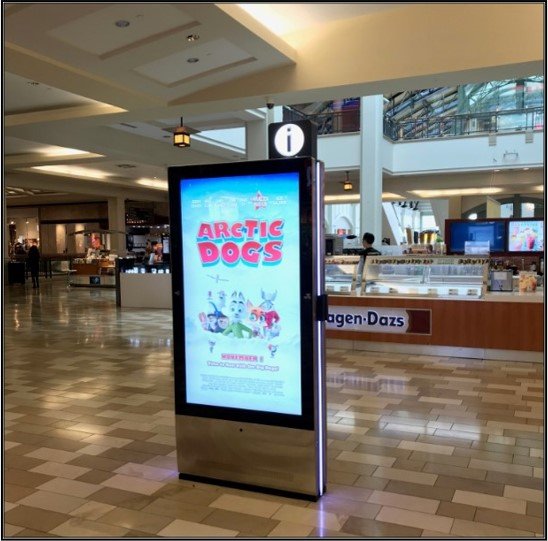
Retail media has become one of the fastest-growing categories in advertising, built on the idea of reaching shoppers close to the point of purchase using a retailer's own data and inventory. Shopping center out of home advertising was doing a version of this long before the term existed, by placing brand messages physically inside the environment where purchase decisions happen.
This article explains how the two overlap, where they differ, and how a media plan can use both to reach shoppers at different points in the path to purchase.
What retail media networks are
A retail media network is advertising inventory owned or controlled by a retailer, sold to brands that want to reach that retailer's shoppers. It commonly includes on-site website placements, app inventory, in-store digital screens, and sometimes loyalty data used for targeting elsewhere.
The appeal is proximity to purchase and access to first-party data that shows what a shopper actually bought, which is harder to get from broad digital advertising.
How mall advertising overlaps
Shopping center advertising shares the core logic of retail media: physical proximity to a purchase-ready audience. A digital panel near a mall entrance or a kiosk near an anchor store reaches the same kind of intent-carrying shopper that a retail media network targets on a retailer's app.
The difference is scope. A mall reaches shoppers across every store in the property rather than a single retailer's customer base, which suits brands that do not have a direct retail media relationship with a specific chain, or that want to reach the category broadly rather than one retailer's audience alone.
Where they differ
Retail media typically offers granular, retailer-specific data and can tie a specific ad exposure to a specific purchase within that retailer's systems. Mall advertising cannot match that level of transaction-level attribution, but it offers physical scale, larger format sizes, and an audience that is not limited to a single retailer's shopper base.
- Retail media: transaction-level data, single retailer scope
- Mall advertising: broader shopper base, larger physical formats
- Retail media: primarily digital and app-based inventory
- Mall advertising: mix of static, digital, and experiential formats
Building a combined plan
Brands that sell through multiple retailers can use mall advertising to build category-level awareness across an entire trade area, then use retail media within specific retailer ecosystems to convert that awareness into a purchase inside stores that carry the product.
The mall placement does the work retail media cannot: reaching shoppers before they enter a specific store, while they are still deciding where to shop and what to buy.
Digital mall inventory as its own retail media layer
Digital screens inside shopping centers increasingly function like a retail media network of their own, since they can be sold on a schedule, updated centrally, and paired with foot traffic data from the property. Brands negotiating retail media deals should ask whether mall digital inventory is part of the offer, since it is often overlooked next to app and website placements.
Measuring the combination
Track branded search and foot traffic lift in markets running mall advertising against markets running retail media alone. Where possible, compare sales performance at retailers located inside or near the malls carrying the campaign against retailers outside that footprint.
Frequently asked questions
Is mall advertising a type of retail media?
It shares the same proximity-to-purchase logic, though it is typically sold by the property rather than a single retailer.
Can I buy retail media and mall advertising together?
They are usually purchased separately, but they can be planned together as part of one campaign strategy.
Does mall advertising offer the same data as retail media?
Not at the transaction level, but foot traffic and dwell time data are increasingly available from many properties.
Which is better for brand awareness versus conversion?
Mall advertising tends to build broader awareness across a trade area, while retail media tends to influence a purchase closer to the point of sale.
Sources
- IAB digital advertising standards
- Think with Google consumer insights
- Nielsen advertising research
- ICSC shopping center industry research
- Comscore audience measurement
Related reading
MallAds.com helps advertisers turn retail media networks and OOH research into a practical media plan, with placement support across more than 1,700 malls and billboard markets nationwide.