

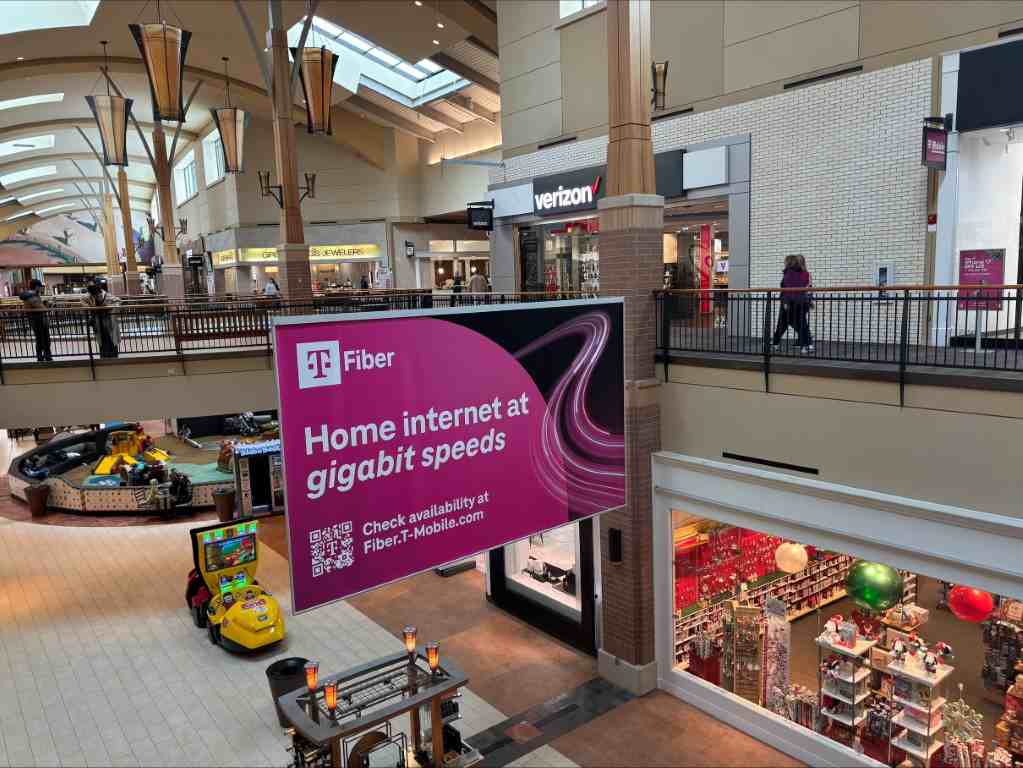
Kiosks sit in the middle of the walkway, at eye level, in the exact place shoppers look when they are deciding where to go next. That position is what makes kiosk advertising the most requested in-mall format and the one that most reliably produces measurable response.
This article covers where kiosks belong, how to judge one position against another, and how to build creative for a screen a shopper sees while walking.
The anatomy of a good kiosk position
Center court, anchor thresholds, and the junctions where two concourses meet are the premium spots. Each shares the same characteristic: shoppers approach head-on and slow down as they orient themselves.
Positions to scrutinize are corridors between low-traffic wings, screens angled away from the main path, and units placed behind seating or planters that block the lower half of the display.
Static versus digital kiosks
Static kiosks are printed panels in a freestanding frame, often double or four sided. They give exclusive ownership of the surface for the flight. Digital kiosks share a loop but add motion, dayparting, and instant changes.
For a fixed message such as a clinic name, location, and phone number, static is efficient. For anything time-sensitive or multi-message, digital pays for itself.
Creative for a walking audience
Assume one and a half seconds. Everything else follows from that: a dominant brand, one line of message, one action, and nothing that requires close reading.
- Logo large enough to identify at fifteen feet
- One benefit stated in plain language
- One action, such as a short URL or a QR code at eye height
- Strong contrast that survives bright ambient light
- No paragraphs, no legal fine print, no crowded layouts
Buying kiosks as a package
Shoppers move through a center in loops. Three kiosks positioned along that loop deliver three exposures in one visit, which is why a package inside one property usually outperforms single units scattered across several.
Ask for a property map with the units marked before you buy, and check whether the proposed kiosks are all in the same wing, which would waste the frequency advantage.
What kiosks cost relative to other formats
Kiosk rates sit in the middle to upper range of in-mall inventory, reflecting their position on the shopper path. On a per-impression basis they typically compare well against banners because the audience is closer and more engaged.
Measuring kiosk campaigns
Give the kiosk its own tracking mechanism: a unique QR destination, a vanity URL, or a dedicated phone number. Because kiosks reach shoppers mid-journey, response often shows up as store visits and calls within hours rather than days.
Frequently asked questions
Do I need to be a mall tenant to buy a kiosk placement?
No. Most kiosk advertisers have no store in the center and buy purely for the audience.
Are kiosks available in every mall?
Digital kiosk networks are widespread but not universal. Availability and screen counts vary by property.
What is the minimum kiosk buy?
Usually one unit for one four-week flight, though packages of two or three deliver noticeably better results.
How fast can a kiosk campaign launch?
Digital kiosks can go live within days of approved artwork.
Sources
- DPAA digital out of home industry resources
- ICSC shopping center industry research
- Out of Home Advertising Association of America
- Geopath OOH audience measurement
- National Retail Federation research
Related reading
Use this mall kiosk advertising guidance as a starting point, then ask MallAds.com to confirm current locations, formats, timing, and pricing for your campaign.