

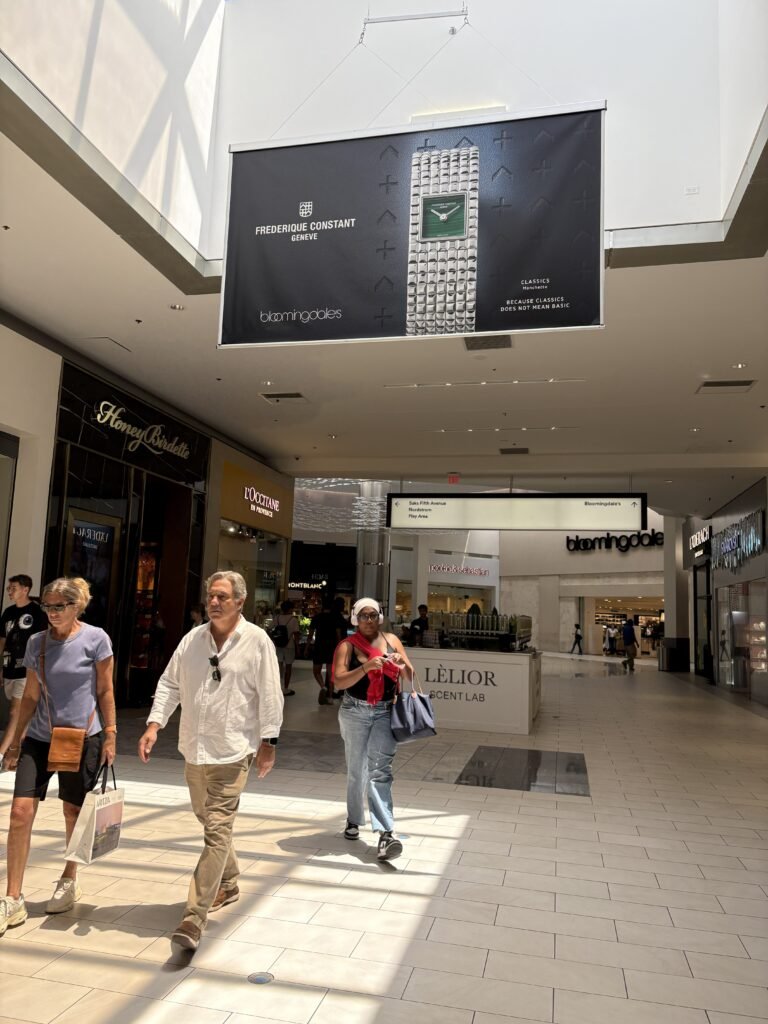
Transit advertising, bus shelters, bus wraps, and rail platform panels, and mall advertising both fall under the out-of-home umbrella, and marketers often lump them together in a single line item. They behave quite differently once you look at who sees them, for how long, and in what state of mind.
This comparison breaks down the practical differences so a campaign brief lands on the format that actually fits the audience and the market.
Audience state: commuting vs shopping
Transit riders and drivers passing a bus wrap are typically in transit toward a destination, often with a fixed routine and limited attention to spare for anything outside getting where they are going. The exposure is frequent for regular commuters but the mindset is not particularly receptive to a purchase decision.
Mall shoppers are, by definition, already in a spending environment. They have set aside time to browse, buy, or be entertained, which makes them more receptive to product and offer messaging than someone glancing at a shelter panel while waiting for a bus.
Dwell time and format detail
Transit formats are built for a quick read: bus shelter posters and platform panels are typically viewed for a few seconds while waiting or passing. Bus wraps are viewed even more briefly, from a distance, by other drivers.
Mall formats support far more detail. A food court panel, a directory ad, or a digital screen near seating gets viewed by someone who is stationary or moving slowly, for long enough to read a paragraph of copy or a short list of services.
- Transit: seconds of attention, best for a single strong visual and short line
- Mall food court and seating areas: extended dwell, supports detailed copy
- Transit: high frequency of exposure for regular riders on a fixed route
- Mall: repeated exposure within a single visit and across return trips
Geographic reach
Transit advertising follows routes, which means its reach is defined by where buses and trains travel rather than by a single catchment area. This suits advertisers targeting a corridor or a specific set of neighborhoods along a transit line.
Mall advertising is anchored to a property's trade area, drawing from a radius of surrounding communities regardless of transit access. In markets with limited public transit, this is often the more reliable geographic unit to plan against.
Cost and availability
Transit inventory is typically sold through transit authorities or their advertising partners, with pricing often structured around shelter counts, routes, or fleet percentages, and availability tied to municipal contracts.
Mall inventory is sold directly through property advertising programs, with more flexibility in format choice and flight length, and often faster turnaround for production and installation since it does not depend on municipal approval processes.
Weather and condition of the media
Outdoor transit shelters and bus wraps are exposed to weather, vandalism, and wear, which can shorten the effective life of a creative execution and requires more frequent maintenance checks.
- Indoor mall placements are protected from weather and general wear
- Transit shelters require regular inspection for damage and cleanliness
- Digital transit and mall screens both need remote content monitoring
Choosing between them or combining
A campaign built around a commuter corridor, particularly for a workplace, gym, or transit-adjacent retailer, benefits more from transit placements. A campaign built around household spending, retail, healthcare, or services, benefits more from mall placements.
In markets where both are available, running transit for commuter reach and mall for shopper reach covers two different parts of a person's day without much overlap in when they see the message.
Frequently asked questions
Which is cheaper, transit or mall advertising?
It varies by market. Transit shelter pricing and mall placement pricing are structured differently, so cost comparisons should be made per flight against your specific market's inventory.
Does transit advertising work for retail brands?
It can build awareness along a corridor, but mall advertising typically converts better for retail because shoppers are already in a buying mindset.
Can the same creative be used for both formats?
The core branding can carry over, but transit creative should be simplified for a few seconds of viewing while mall creative can carry more detail.
Is transit advertising affected by weather more than mall advertising?
Yes, outdoor transit media is exposed to the elements while indoor mall placements are not.
Sources
- Out of Home Advertising Association of America
- Geopath OOH audience measurement
- DPAA digital out of home industry resources
- Statista out of home advertising statistics
- U.S. Census Bureau retail trade data
Related reading
Ready to apply these comparisons insights? MallAds.com brings more than 20 years of shopping-center and billboard experience to campaigns built around your market, audience, and budget.