

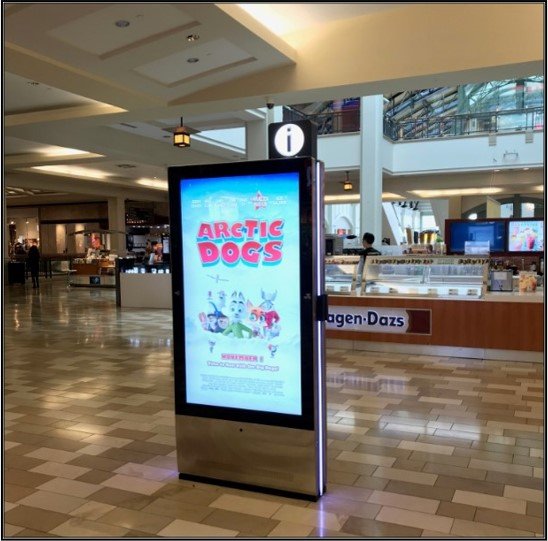
Buying out-of-home advertising is not a self-serve checkout process the way buying a digital ad slot can be. It runs through a sequence of steps involving availability, negotiation, production, and installation, and each step has its own lead time. Buyers who understand that sequence book earlier, avoid rush fees, and end up with better placements.
This article walks through the process end to end, from the first conversation with a media rep to the day a display goes live, so a first-time buyer knows what to expect and when.
Step one: define the objective and the geography
Every buy starts with a brief, even an informal one. A rep needs to know what the campaign is trying to accomplish, who the audience is, and where that audience lives, works, or shops. Vague objectives lead to vague media plans, so the more specific the buyer can be about geography and audience, the faster the process moves.
Geography usually narrows to a list of ZIP codes, a drive-time radius around a location, or a named set of shopping centers. This is also the point where budget range gets discussed, because it determines whether the conversation is about a single kiosk or a multi-market program.
Step two: availability and inventory review
Once the geography is set, the media owner checks which units are open in that footprint for the requested dates. Out-of-home inventory is finite and often booked months ahead, so popular placements such as center-court kiosks or entrance backlits can already be reserved by other advertisers.
A buyer typically receives two or three options rather than a single quote: a preferred placement, an alternative in the same property, and sometimes a nearby property with similar traffic. Comparing these side by side against the campaign objective is more useful than fixating on one unit.
- Traffic counts or audience estimates for each option
- Unit dimensions and production requirements
- Available flight dates and minimum commitment length
- Rate and any package discounts for multiple units
Step three: quoting and negotiation
Rate cards exist but they are a starting point, not a fixed price. Flight length, number of units, repeat business, and timing all affect the final number. A buyer committing to several units across multiple months should expect a materially better rate than one booking a single panel for four weeks.
This is also when production and installation costs get itemized separately from media cost, since they vary by format and are easy to overlook when comparing two quotes that bundle costs differently.
Step four: contract and insertion order
Once terms are agreed, the buyer signs an insertion order or contract specifying the unit, dates, rate, and production responsibilities. This is the document that governs the relationship, so any verbal promises about placement quality or make-goods for equipment downtime should be captured here in writing.
Standard contracts also cover cancellation terms and what happens if a unit becomes unavailable due to property renovation or lease changes, which is worth reading before signing rather than after a problem occurs.
Step five: creative production
With the contract signed, artwork moves into production against the media owner's specifications. Print formats need lead time for proofing and fabrication; digital formats need file delivery in the correct resolution and aspect ratio. Missing a production deadline is the single most common cause of a delayed launch.
- Confirm specs before design work begins, not after
- Build in time for at least one proof revision
- Ship physical materials with buffer time for installation crews
Step six: installation and verification
Installation is scheduled by the property or the media owner's install team, and a buyer should ask for photo verification once the campaign is live. This confirms the correct creative is displayed in the correct location and catches any production errors early, while there is still time to correct them.
For digital placements, verification also includes confirming the loop is playing at the agreed frequency and that the content displays correctly on the actual screen hardware, since colors and cropping can render differently than on a design monitor.
Step seven: reporting and renewal
During the flight, most media owners provide performance data relevant to the format, such as impression estimates or screen play logs. At the end of the flight, the renewal conversation is easiest to have with performance data in hand, and buyers who plan to repeat campaigns seasonally benefit from locking in dates for the next cycle before the current one ends.
Frequently asked questions
How far in advance should I start the buying process?
For a single unit, four to six weeks is usually enough. For multi-market or high-demand placements, three months ahead gives more choice and better rates.
Can I buy out-of-home without an agency?
Yes. Many advertisers work directly with the media owner, especially for local mall or billboard placements.
What happens if my artwork is late?
The flight start date usually slips or the campaign launches with a placeholder, so it is worth protecting the production deadline in the schedule.
Do I need a signed contract before production starts?
Yes. Production should not begin until dates, rate, and specs are confirmed in writing to avoid rework.
Sources
- Out of Home Advertising Association of America
- ICSC shopping center industry research
- Association of National Advertisers
- Geopath OOH audience measurement
- U.S. Small Business Administration marketing guidance
Related reading
Ready to apply these planning insights? MallAds.com brings more than 20 years of shopping-center and billboard experience to campaigns built around your market, audience, and budget.