

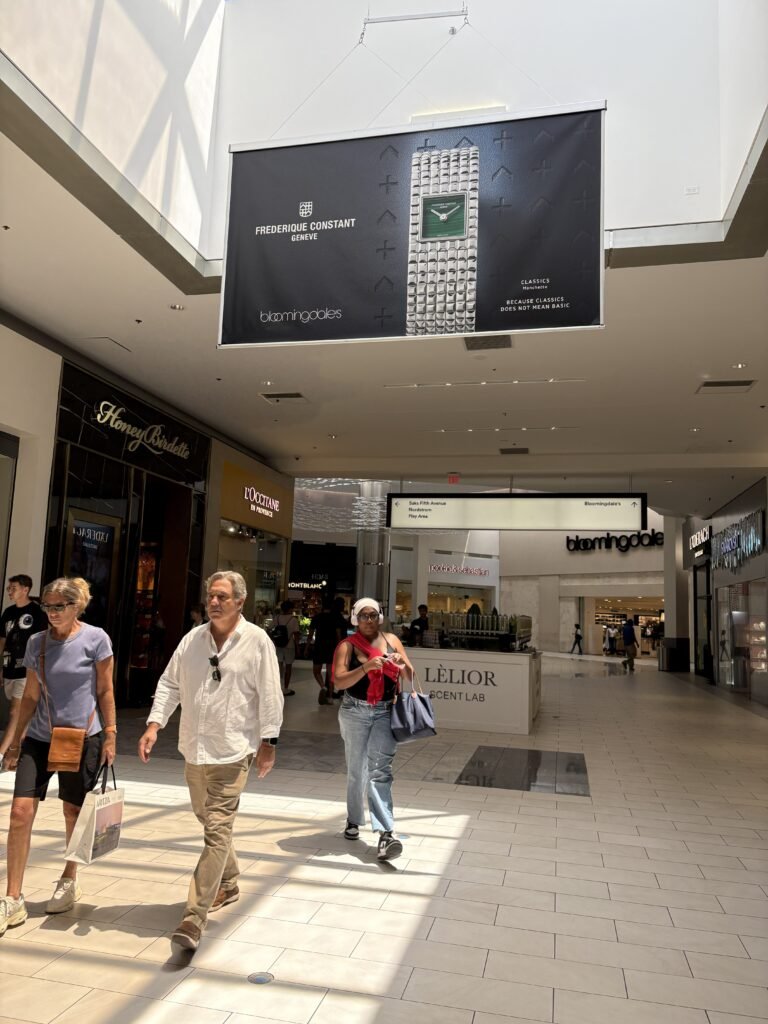
A national out-of-home buy and a local one are not just different sizes of the same purchase, they run through different processes, pricing structures, and levels of control. A brand deciding between the two needs to weigh coordination overhead against the efficiency of scale, and the right answer depends heavily on how uniform the brand's audience and message are across markets.
This article compares the two approaches directly, covering cost structure, creative flexibility, and the operational differences buyers should expect.
How the two buys actually differ
A local buy is negotiated directly with individual properties or a regional media owner, tailored to that market's specific inventory and audience. A national buy typically runs through a media buying network or agency that aggregates inventory across many properties, standardizing the process but reducing per-market customization.
The distinction matters most when a brand's needs vary meaningfully by market. A retailer with different store formats or regional promotions in different areas often gets a better outcome from local buys stitched together deliberately than from a single national package that treats every market the same.
Cost structure and volume pricing
National buys benefit from volume pricing that a single-market advertiser cannot access, since the aggregated spend across dozens or hundreds of properties gives real negotiating leverage. This typically produces a lower cost per unit than negotiating each market separately.
The trade-off is that national packages sometimes bundle in markets or units that are not equally valuable to the brand, effectively subsidizing weaker inventory with strong inventory. A careful buyer reviews the market list in a national package rather than assuming uniform value across it.
- National buys unlock volume pricing not available locally
- Bundled packages may include lower-value markets
- Local buys allow full control over which specific units are purchased
Creative flexibility across markets
Local buys make it straightforward to run market-specific creative, referencing a local address, a regional promotion, or language relevant to that community's demographics. National buys tend to run a single creative version across markets for efficiency, though larger campaigns can produce regional variants if the budget supports it.
Brands with a strong local identity, such as regional grocery chains or multi-location service businesses, often get more value from localized creative than from national reach with generic messaging.
Speed and coordination overhead
Local buys move faster because there are fewer parties involved: a single property or regional owner, one contract, one production run. National buys require coordinating specs, timelines, and approvals across many properties simultaneously, which adds real project management time even when the media buying network handles most of the logistics.
Brands on a tight launch timeline sometimes underestimate how much longer a multi-market rollout takes to coordinate compared to a single local placement.
When local buying makes more sense
A single-location business, a regional franchise group, or any brand whose customer base is concentrated in a defined trade area gets little benefit from national scale and full benefit from local targeting. Local buys also make sense when testing a new format or message before committing to a larger rollout.
- Single-location or regionally concentrated businesses
- Campaigns testing a new format or creative approach
- Brands needing market-specific messaging or promotions
When national buying makes more sense
Brands with consistent positioning across markets, a national retail footprint, or a launch that needs simultaneous presence across many cities benefit from the efficiency and pricing of a national buy. The uniformity that is a limitation for a locally distinct brand is an advantage for a brand that wants the same message everywhere.
A hybrid approach
Many mid-size brands run a hybrid: a national or multi-market base layer for consistent brand presence, supplemented by local buys in priority markets for deeper concentration or localized messaging. This captures scale efficiency where it matters and local relevance where it matters more.
Frequently asked questions
Is national buying always cheaper per unit?
Usually, due to volume pricing, but bundled packages can include lower-value inventory that offsets the savings.
Can a local business benefit from a national media buying network?
Rarely directly, since those networks are built for multi-market scale. Local buys are typically more efficient for single-market advertisers.
How much longer does a national rollout take to coordinate?
Meaningfully longer than a single local placement, due to the number of properties and approvals involved.
Can creative differ by market in a national buy?
Yes, though it usually requires additional production budget for regional variants rather than a single universal asset.
Sources
- Out of Home Advertising Association of America
- ICSC shopping center industry research
- Association of National Advertisers
- U.S. Census Bureau retail trade data
- Statista out of home advertising statistics
Related reading
MallAds.com helps advertisers turn national vs local ooh buys research into a practical media plan, with placement support across more than 1,700 malls and billboard markets nationwide.