

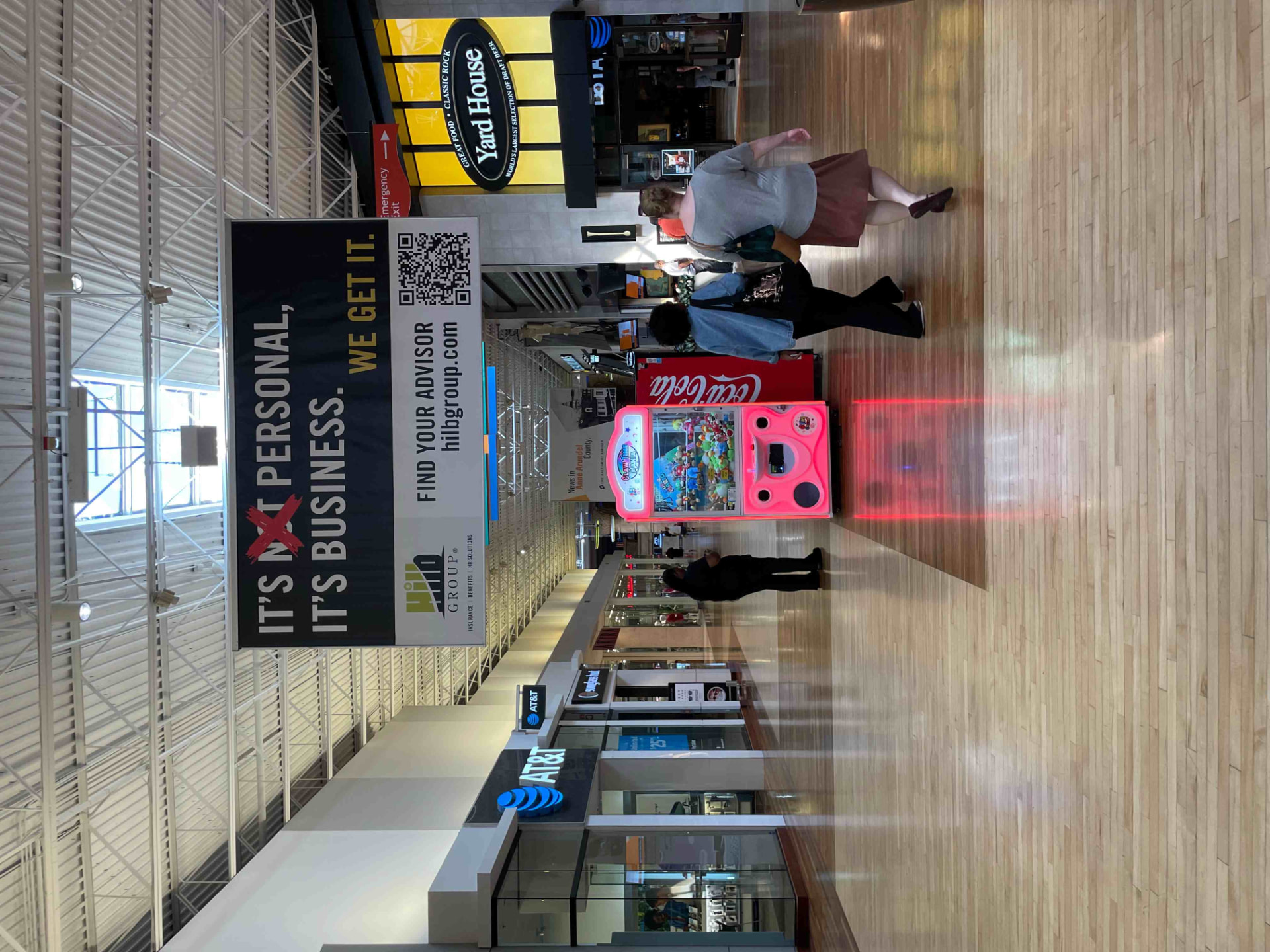
Nonprofits often assume out-of-home advertising is reserved for retail brands with large budgets, but shopping centers reach exactly the local, community-based audience most nonprofits need: people who live nearby, shop nearby, and are reachable for donations, volunteering, or awareness campaigns without a national media budget.
This article covers how nonprofits use mall advertising, which formats fit tight budgets, and how to make the case for the spend to a board or funder.
Why the local audience fits
A shopping center's audience is drawn almost entirely from the surrounding community, which is precisely the geography most nonprofits operate within. Unlike national digital advertising, there is no wasted reach outside the service area, and unlike direct mail, there is no cost per household regardless of who actually engages.
Community members already trust the mall as a familiar, everyday space, which lends a degree of local credibility to a message that appears there, especially for organizations building name recognition in a new community.
Common nonprofit use cases
Awareness campaigns for public health issues, safety programs, or social causes reach a broad cross-section of the community that a nonprofit's own mailing list or social following cannot match. Fundraising campaigns, particularly around giving seasons like year-end and Giving Tuesday, benefit from the same visibility retailers seek during their own peak seasons.
- Volunteer and donor recruitment drives
- Public safety and health awareness campaigns
- Year-end giving and capital campaign visibility
- Event promotion for galas, walks, and community drives
Formats that fit nonprofit budgets
Directory advertising and smaller static placements offer meaningful visibility at a lower cost than premium digital or exterior formats, and many properties are willing to work with nonprofits on rate or placement given the community benefit of the message. Standee and kiosk placements near high-traffic entrances offer a middle ground between cost and visibility.
Some properties donate space for public service messaging as part of their community relations programs, which is worth asking about directly with property management before assuming full commercial rates apply.
Messaging for a cause
Clarity on the ask matters more in nonprofit messaging than in retail advertising, since a shopper needs to immediately understand whether the message is asking them to donate, volunteer, attend an event, or simply be aware of an issue. A single clear call to action, paired with a QR code or simple phone number, converts far better than a message that tries to explain the full mission.
Emotional specificity, such as a single story or statistic tied to the local community, outperforms broad statements about the cause, since it gives shoppers a concrete reason to care about that particular organization.
Making the budget case
Boards and funders often question paid advertising for a nonprofit, so framing the spend against cost per impression compared to direct mail or event marketing helps make the case. Tracking a specific, attributable outcome, such as donations through a dedicated code or landing page, gives a concrete return to report back.
Measuring nonprofit campaigns
Track a campaign-specific QR code or phone number to attribute donations, volunteer sign-ups, or event registrations to the mall placement directly. Compare campaign period results against a similar period without the placement to estimate incremental impact.
Frequently asked questions
Do malls offer discounted rates for nonprofits?
Some properties do, particularly for public service messaging, but this varies by property and is worth asking about directly.
What format works best on a limited nonprofit budget?
Directory advertising and standee placements typically offer the most visibility per dollar for smaller budgets.
How can a nonprofit measure the impact of mall advertising?
A dedicated QR code, phone number, or landing page tied specifically to the campaign is the clearest way to attribute results.
Is mall advertising suitable for a one-time event or ongoing campaign?
Both. Short flights work well for a specific event, while longer flights build recognition for an ongoing cause or organization.
Sources
- ICSC shopping center industry research
- Pew Research Center
- U.S. Small Business Administration marketing guidance
- Out of Home Advertising Association of America
- U.S. Census Bureau retail trade data
Related reading
Use this mall advertising for nonprofits guidance as a starting point, then ask MallAds.com to confirm current locations, formats, timing, and pricing for your campaign.