

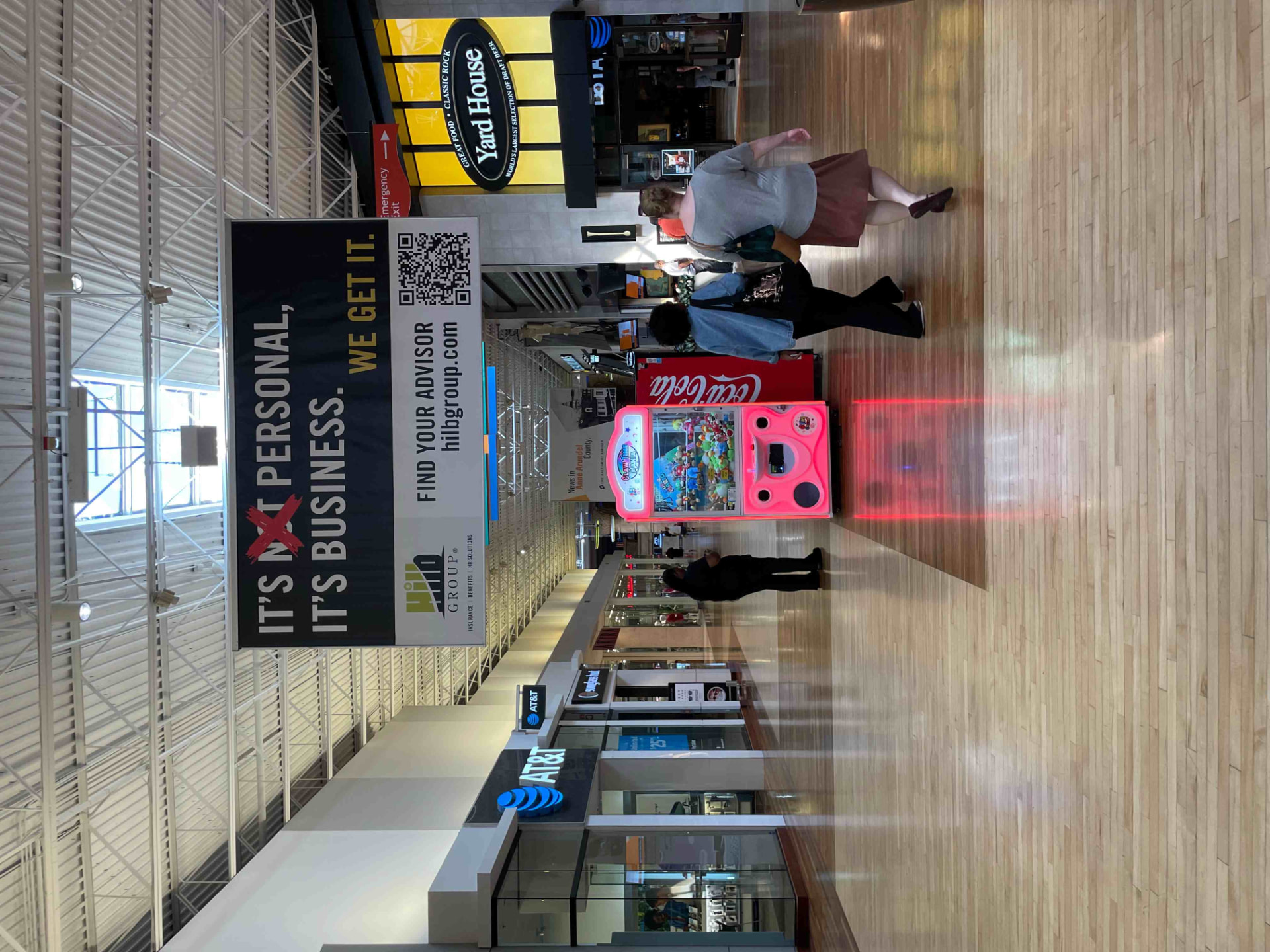
A mall advertising contract, sometimes called an insertion order or license agreement, is the document that governs everything about a placement: what it costs, how long it runs, who is responsible for production, and what happens if something goes wrong. Most disputes in out-of-home advertising trace back to a term that was never clarified before signing.
This article covers the sections that matter most, in plain terms, so a buyer can read a contract critically rather than skimming to the signature line.
Scope and placement description
The contract should identify the exact unit or units being purchased, including location within the property, dimensions, and format. A vague description such as 'interior signage' leaves room for the media owner to substitute a lesser location, so specificity protects the buyer as much as it protects the seller.
If the buy includes multiple units across different properties, each should be listed individually with its own location detail rather than bundled as a lump sum, since that makes it easier to track what was actually delivered.
Flight dates and minimum commitment
Every contract specifies a start date, end date, and often a minimum commitment period for formats that require significant production investment, such as escalator wraps or column wraps. Minimums exist because production costs for large-format units are fixed regardless of flight length, so a short flight would not recoup the media owner's setup cost.
Buyers should confirm whether the start date is guaranteed or contingent on production completion, since a self-inflicted artwork delay should not extend the paid flight window at the buyer's expense.
- Exact start and end dates, not just a flight duration
- Minimum term for large-format or custom installations
- Whether extensions are automatic or require a new agreement
Production and installation responsibility
Contracts typically separate media cost from production and installation cost, and specify who is responsible for each: the advertiser supplying print-ready files, or the media owner handling full production. Ambiguity here is a common source of billing surprises after the fact.
It is worth confirming who owns the physical materials at the end of the flight and whether removal and disposal are included in the price or billed separately.
Cancellation and rescheduling terms
Cancellation clauses set out how much notice is required and what portion of the fee, if any, is refundable at different points before the flight starts. Many properties also require notice periods measured in weeks rather than days, since inventory has to be re-offered to other advertisers.
Buyers running seasonal or promotional campaigns should pay particular attention to these terms, since a cancelled event or shifted launch date can otherwise leave a nonrefundable balance on the books.
Make-goods and equipment downtime
For digital placements, contracts should address what happens if a screen malfunctions during the flight: whether the advertiser receives a make-good in additional play time, a credit, or an extended flight. Static placements should cover what happens if the unit is damaged or removed due to property construction.
- Make-good policy for digital screen downtime
- Remedy if a unit is removed for property renovation
- Notification timeline for any service interruption
Renewal and rate protection
Some contracts include a right of first refusal or a rate hold for renewal, which is valuable for advertisers who want to keep the same placement year over year without competing for it again at open-market rates. This term is negotiable and worth raising if a long-term relationship is the goal.
Reading before signing
It is reasonable to ask for a redline period before signing, particularly on larger buys involving multiple properties. Most media owners work from a standard template and are used to reasonable requests for clarification on dates, responsibilities, and cancellation terms.
Frequently asked questions
Is a mall advertising contract negotiable?
Yes, particularly on rate, minimum term, and cancellation notice for larger or repeat buys.
What is a make-good?
Compensation, usually in the form of additional display time or a credit, for a placement that did not perform as contracted, such as a malfunctioning screen.
Who typically owns production files after the flight ends?
This varies by contract, so it should be specified explicitly rather than assumed.
How much cancellation notice is standard?
It varies by property, but two to four weeks before the flight start is common for standard units.
Sources
- ICSC shopping center industry research
- Out of Home Advertising Association of America
- FTC advertising and marketing rules
- Association of National Advertisers
- U.S. Small Business Administration marketing guidance
Related reading
Ready to apply these planning insights? MallAds.com brings more than 20 years of shopping-center and billboard experience to campaigns built around your market, audience, and budget.