

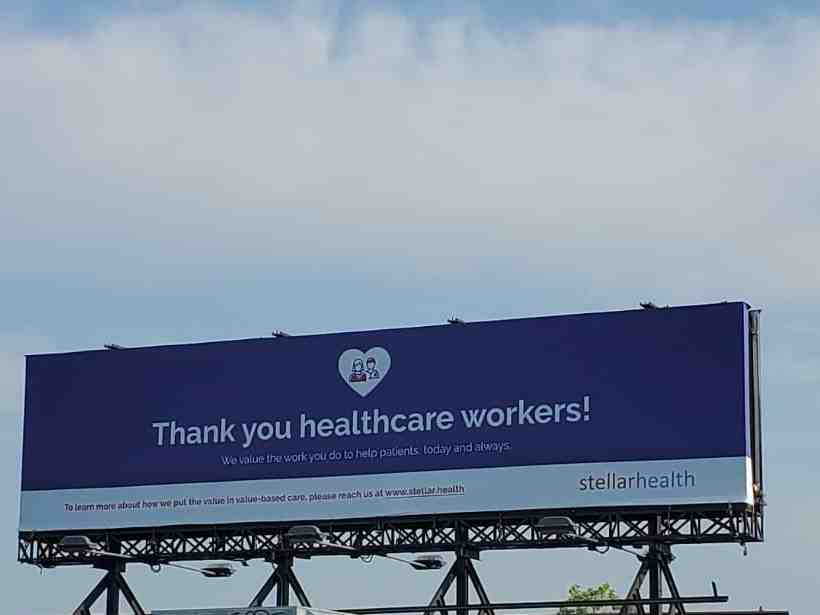
Healthcare marketing has a geography problem: a hospital or practice serves a defined area, and most digital advertising either overshoots it or costs a premium to constrain. Shopping center advertising solves that directly, because a mall's audience is drawn from precisely the trade area a provider serves.
This article covers which formats suit healthcare messages, how to write for a considered decision, and the compliance points to get right before artwork goes to print.
Why the audience fits
Shopping center traffic looks like a community: families, older adults, working people on their lunch break, and caregivers running errands. That is the same population a health system is trying to reach, and unlike a targeted digital audience it includes people who are not currently searching for care.
Most healthcare decisions are made before symptoms arrive. Recognition built over months is what puts a name in mind at the moment it matters.
Formats that suit healthcare messages
Healthcare usually needs more explanation than a passing glance allows, so high-dwell placements do most of the work.
- Food court panels where a service list can actually be read
- Directory advertising, which reaches shoppers already reading for information
- Backlit panels near entrances for name recognition
- Digital screens for time-sensitive messages such as flu clinics
- Column wraps for repeated exposure along the main concourse
Writing healthcare creative
Lead with the service and the location, not with the institution's history. A shopper needs to know what you do, where you are, and why now. Naming the specific service line, such as orthopaedics, cardiology, or urgent care, outperforms generic reassurance.
Include one clear action: a phone number for appointment-driven services, or a QR code linked to a scheduling page for high-dwell placements.
Compliance considerations
Health advertising is regulated, and claims must be substantiated. Avoid outcome guarantees, comparative superiority claims without support, and any use of patient information or imagery without proper consent and documentation.
Build review time into the schedule. Legal and compliance sign-off is usually the longest step in a healthcare campaign, not production.
Seasonal timing
Healthcare has a clear calendar: open enrollment in the autumn, flu and vaccination campaigns from September, new-year wellness and screening in January, sports physicals in late summer, and allergy messaging in spring.
Booking against those windows rather than running flat across the year improves both response and rate efficiency.
Measuring healthcare campaigns
Track new patient registrations by ZIP code, appointment requests originating from campaign landing pages, and call volume against a dedicated number. Compare campaign markets against similar markets without placements to isolate the effect.
Frequently asked questions
Can a single practice afford mall advertising?
Yes. A single kiosk or directory panel in one property is within reach of most independent practices.
Which format works best for urgent care?
Placements near entrances and parking access, where the location message reaches people arriving and leaving.
Are there restrictions on healthcare creative?
Claims must be substantiated and privacy rules strictly observed. Allow extra time for compliance review.
How long should a healthcare flight run?
Longer than retail. Recognition matters more than immediate response, so multi-month presence performs best.
Sources
- CDC public health communication resources
- Agency for Healthcare Research and Quality
- FTC advertising and marketing rules
- ICSC shopping center industry research
- Out of Home Advertising Association of America
Related reading
Ready to apply these industries insights? MallAds.com brings more than 20 years of shopping-center and billboard experience to campaigns built around your market, audience, and budget.