

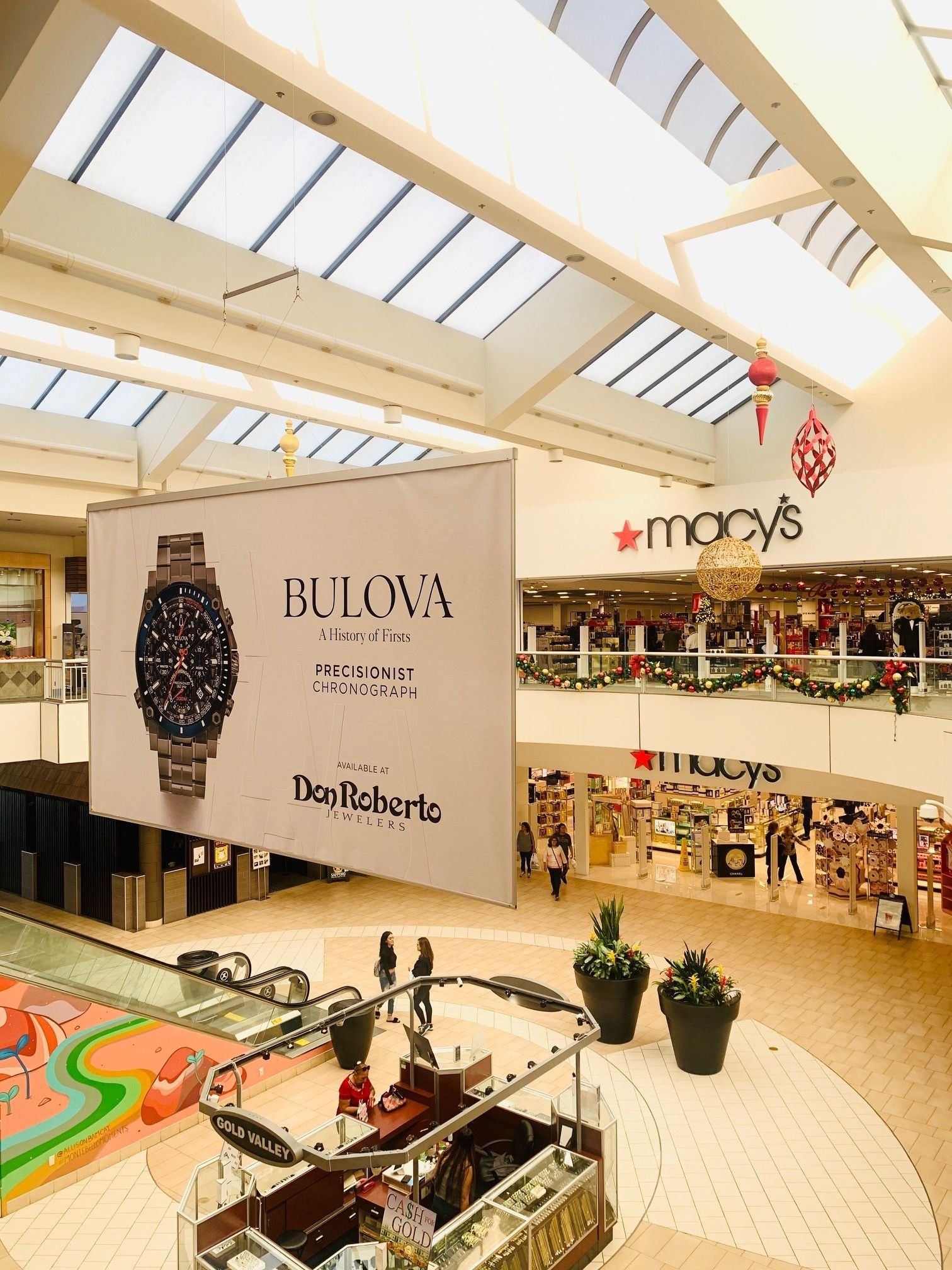
Shopping center traffic follows a calendar that barely changes from year to year. Knowing it lets you buy the weeks that matter to your business, avoid paying peak rates for weeks that do not, and book before the inventory you want is gone.
This is the working calendar we use with clients, along with the booking lead times each season demands.
January and February
Traffic drops sharply after the first week of January and stays moderate. Rates are at their most negotiable, and inventory is widely available.
This is the best value window of the year for fitness, healthcare, tax services, education, home improvement, and recruitment, all of which are selling into genuine January demand rather than fighting for holiday attention.
March through May
Traffic builds steadily through spring, lifted by tax refunds, spring break, prom and graduation shopping, and Mother's Day.
- Automotive and home services enter their strongest season
- Jewellery and formalwear peak around prom and graduation
- Healthcare and dental drive spring appointment campaigns
- Summer camps, colleges, and training programs recruit
- Home improvement and outdoor retail ramp up
Summer
June and July hold steady traffic with a different mix: more families, more teenagers, more midday visits as the mall serves as a cool, safe place to spend an afternoon.
Back-to-school builds through late July and dominates August, which is one of the two heaviest retail periods of the year and a strong window for anything targeting households with children.
The holiday quarter
From late October through December, shopping center traffic reaches its annual peak, with the weeks around Black Friday and the final ten days before Christmas at the top.
Rates are highest and premium inventory sells out earliest. Book holiday placements by late summer, and expect restrictions on installation windows once seasonal décor goes in.
Booking lead times
As a rule of thumb, book digital placements two to four weeks ahead, static in-mall formats four to eight weeks ahead, large installations such as sky banners and spectaculars eight to twelve weeks ahead, and anything for the holiday quarter three to five months ahead.
Lead times are driven as much by production and installation scheduling as by inventory availability.
Buying against the calendar
The contrarian play is real: advertisers who run in January and February often get substantially more presence for the same money, with far less competing message clutter. If your category is not seasonal, that is where the value is.
Frequently asked questions
When is mall traffic highest?
The weeks between Black Friday and Christmas, followed by the August back-to-school period.
When are rates lowest?
January and February, and to a lesser extent the late-summer lull before back-to-school begins.
How early should holiday placements be booked?
Three to five months ahead for premium inventory, earlier in high-demand properties.
Do flights have to align with the calendar month?
Most in-mall inventory runs in four-week flights on a set schedule, so ask for the flight calendar when planning.
Sources
- ICSC shopping center industry research
- National Retail Federation research
- U.S. Census Bureau retail trade data
- Statista out of home advertising statistics
- Bureau of Labor Statistics consumer expenditure data
Related reading
Use this seasonal mall advertising guidance as a starting point, then ask MallAds.com to confirm current locations, formats, timing, and pricing for your campaign.