

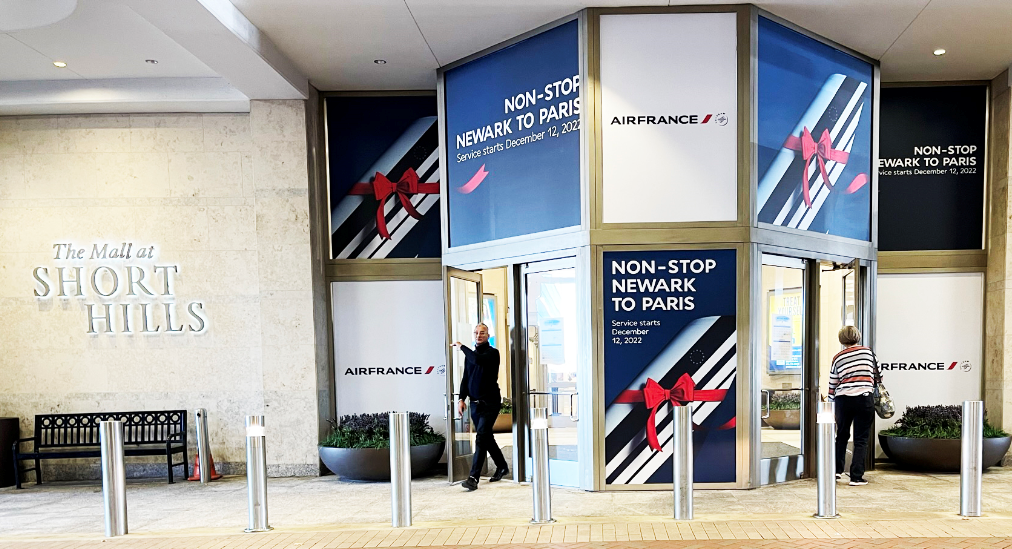
Comparing out-of-home quotes is difficult because vendors describe their inventory in different units. One quote arrives as a monthly rate, another as a four-week flight, a third as a package across nine screens. Without a common denominator the comparison is meaningless.
The denominator is cost per thousand impressions. This article shows how to normalize any out-of-home quote to CPM and what ranges to expect across the major formats.
Normalize everything to a four-week flight
Out-of-home runs on thirteen four-week flights per year, not twelve calendar months. A vendor quoting a monthly rate is usually quoting a flight. Before comparing anything, restate every quote as cost per face per four weeks, and separate one-time production from recurring media.
Once quotes are in the same shape, add the audience estimate for each unit and divide. Cost divided by thousands of impressions gives you a CPM you can line up side by side across mall panels, kiosks, boards, and transit.
What CPM tells you and what it hides
CPM is the right first filter, but it treats every impression as equal, and they are not. A shopper standing at a mall directory studying a map is a materially better impression than a driver glancing at a poster at fifty miles an hour, even though both count as one.
Weight your comparison by dwell time and by audience relevance. A slightly higher CPM inside a center whose shoppers match your customer profile beats a low CPM against an audience that will never buy from you.
Typical cost structures by format
Formats cluster into predictable ranges relative to one another, even though absolute numbers move with market and season.
- Mall static panels and banners: mid-range CPM, high dwell, exclusive surface
- Mall digital kiosks and panels: mid to high CPM, shared loop, flexible creative
- Highway bulletins: low CPM, enormous reach, very short read time
- Posters and junior boards: lowest CPM, neighborhood-level targeting
- Spectaculars and experiential: highest CPM, highest impact and PR value
Building a mixed-format plan
The strongest plans layer a broad, low-CPM format for reach with a high-dwell format for message depth. Boards build recognition of the name; mall placements deliver the detail, the offer, and the reason to act.
For a fixed budget, we usually recommend allocating roughly two thirds to the high-dwell environment closest to the point of purchase and one third to the reach format that feeds it, then adjusting after the first flight based on response.
Hidden costs to ask about upfront
Production, installation, removal, and creative adaptation for multiple sizes are all real and all avoidable surprises. Ask whether the quoted rate includes them, and ask what happens if you want to change the artwork mid-flight.
A simple benchmarking worksheet
For every unit under consideration, record five fields: format, market, four-week media cost, one-time production, and estimated four-week impressions. Add a sixth column for dwell time in seconds. That single table settles most planning arguments in one meeting.
Frequently asked questions
What is a good CPM for out of home?
It varies widely by format, but out-of-home generally lands below broadcast and above most low-quality digital inventory. Compare within format first, then across.
Why does one mall cost more than another with similar traffic?
Demand and demographics. A center with high household income and strong anchors attracts more advertisers, which supports higher rates.
Should I always pick the lowest CPM?
No. The lowest CPM is often the least relevant audience. Filter by relevance first, then optimize CPM inside that set.
How often do rates change?
Rates are typically reviewed annually and adjusted seasonally with demand, which is why published rate cards go stale quickly.
Sources
- Geopath OOH audience measurement
- Out of Home Advertising Association of America
- Nielsen advertising research
- Statista out of home advertising statistics
- Association of National Advertisers
Related reading
Use this how much does out of home advertising cost guidance as a starting point, then ask MallAds.com to confirm current locations, formats, timing, and pricing for your campaign.